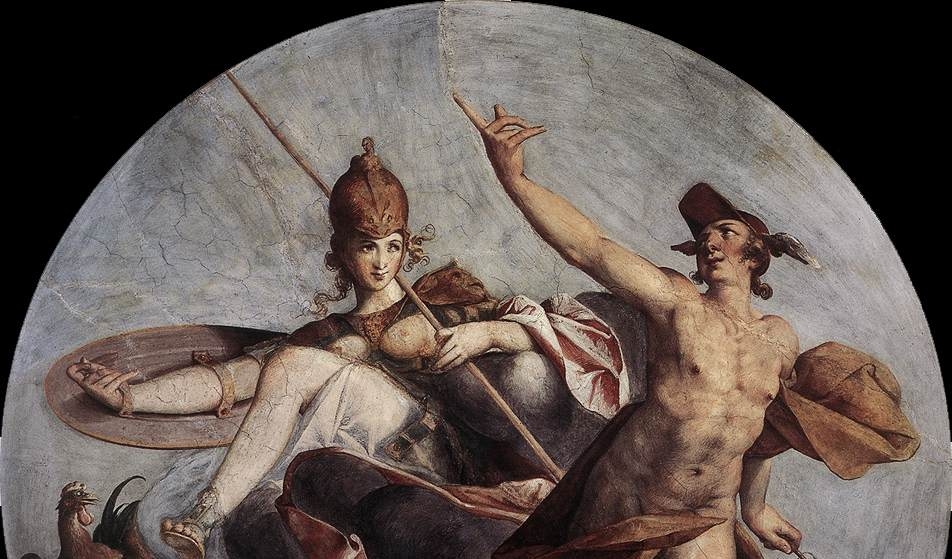
Hermes
Platform for early modern Hellenism
Welcome to Hermes! This platform is intended for spreading information about projects, calls for papers and contributions, and publications related to the ancient Greek heritage in the early modern world.
Initiative: Raf Van Rooy (KU Leuven) & Han Lamers (University of Oslo)
Editors: Adriaan Demuynck, Liese Dictus & Raf Van Rooy (all KU Leuven)
We are currently looking for contributors to the blog. English is the main working language, but we can consider contributions in other major European languages, too. Blogs are typically 1000-2000 words. You can look at previous posts for inspiration in terms of length, style, and tone. Please get in touch with adriaan.demuynck@kuleuven.be if you’re interested in writing a piece. You can find our latest three posts below.
A “Pindaric Lyre” under the Dragon’s Wing: Tito Prospero Martinengo’s Greek Poetry
Elena Maria Cassol (Università Ca’ Foscari Venice) On 13 May 1572, Ugo Boncompagni was elected Pope with the name Gregory XIII and his heraldic dragon would come to dominate the cultural and political landscape for the next thirteen years. Meanwhile, somewhere in Northern Italy, Tito Prospero Martinengo was waiting for the storm to pass. Only…

Zeus, the Fool?
Criticizing the Pagan Father of the Gods in Lorenz Rhodoman’s Ilias parva (1588/1604) Karen Lelittka (Bergische Universität Wuppertal) The Greeks began their education with Homer. Homer retained his reputation as the king of poets throughout the Middle Ages, although his texts could not be read directly except in Byzantium. It was not until the Renaissance…
Trojan Heroes of the Eighty Years’ War (1568–1648): New Ancient Greek, Liberty and Remembrance
Thijs Kersten (Radboud Universiteit Nijmegen) Writing to one of his pen pals on January 21, 1605, the Lowlandish scholar Justus Lipsius (1547–1606) could not help but address the elephant in the room. However pleasant his contact with the Spaniard Francisco Quevedo (1580–1645) had been, Lipsius felt the need to mention the wars Quevedo’s king had…

