Trojan Heroes of the Eighty Years’ War (1568–1648): New Ancient Greek, Liberty and Remembrance

Thijs Kersten (Radboud Universiteit Nijmegen)

Writing to one of his pen pals on January 21, 1605, the Lowlandish scholar Justus Lipsius (1547–1606) could not help but address the elephant in the room. However pleasant his contact with the Spaniard Francisco Quevedo (1580–1645) had been, Lipsius felt the need to mention the wars Quevedo’s king had been waging on the Low Countries for years. First, the Guelders Wars (1502–1543) had ravaged the Low Countries, and now the Eighty Years’ War (1568–1648) followed suit. Lipsius took to the Trojan War as a frame of reference. He exclaimed “And now you happily serve Mars! […] We have become a shared grave for Europe. If only Minerva with her Odysseus would have stood next to your Agamemnon! How good would that do both you and us.” [Atque utinam felicius Marti! […] Commune sepulchrum Europae sumus. O si Agamemnoni vestro Minerua cum suo Vlysse adsistat! Vestrum et nostrum sit bonum.] Simply put, if only the Habsburg king had some wisdom, then this violence might have been avoided.

Lipsius calls the Low Countries a commune sepulchrum Europae, referencing a line from the Roman poet Catullus, who described Troy as commune sepulcrum Asiae Europaeque.[i] These references to Troy were not unique. Both upper class (humanist) and lower class popular audiences evoked the war at Troy to confront their experiences of war and suffering at the hands of the Habsburg Spanish, a process I have called associative memory elsewhere.[ii] Similarities between the destruction of the Low Countries and the Fall of Troy were expressed in Dutch, Latin, and New Ancient Greek – the latter being the rarest of the three linguistic registers. In Dutch popular songs, for instance, the Spanish sieges of Breda in 1590 and Oostende in 1604 were compared to the Trojan horse, by both locals and historians across the Low Countries.[iii]
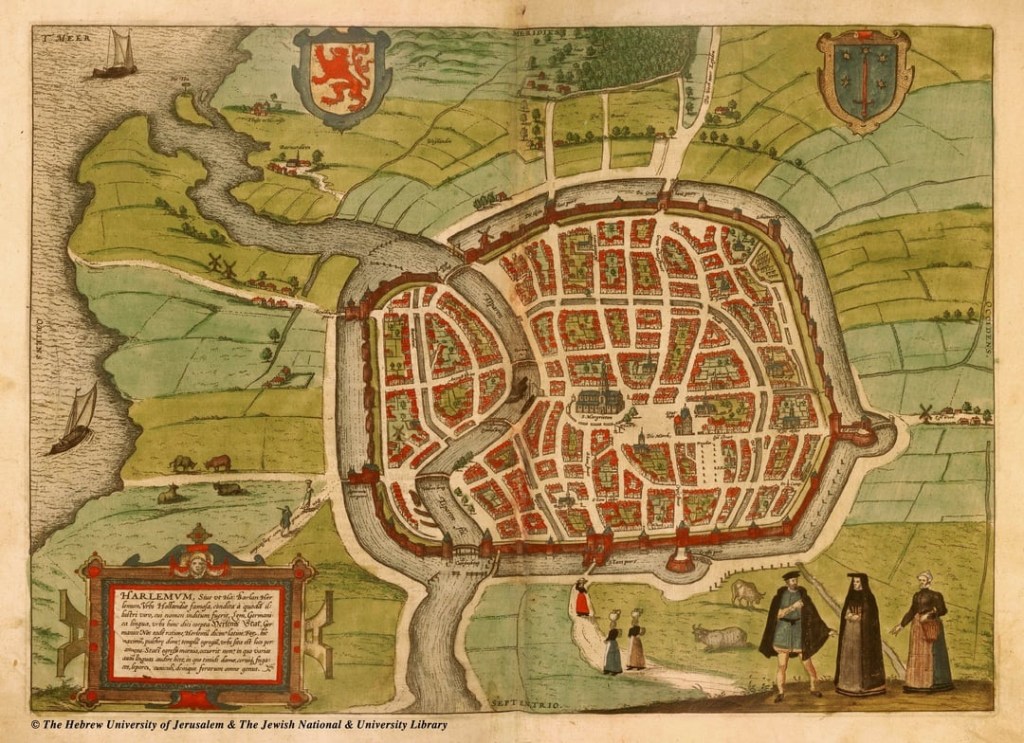
Figure 1. Map of the siege of Haarlem, from Braun and Hogenberg’s Civitates orbis terrarum (1575).

This contribution centres around the role of Hellenism in this discourse of remembrance and resistance. Lamers (2023) recently studied the symbolic value of Ancient Greek in the Low Countries. He tentatively states that both the language and its script could evoke Dutch liberty and resistance. Detaching themselves from Latin (and its modern progeny, Spanish), the Dutch may have adopted Greek as a symbol of political liberty. This contribution aims to support Lamers’ (2023) argument and adds the dimensions of remembrance and heroic victimhood to the mix. To do so, I discuss a poetry zine from Zwolle about the Guelders Wars from 1553 as well as the largest New Ancient Greek epic of the Low Countries (1605), written to remember a siege in the Eighty Years’ War.

The Ἀληκτὼ sive somnium furoris bellici (1553)

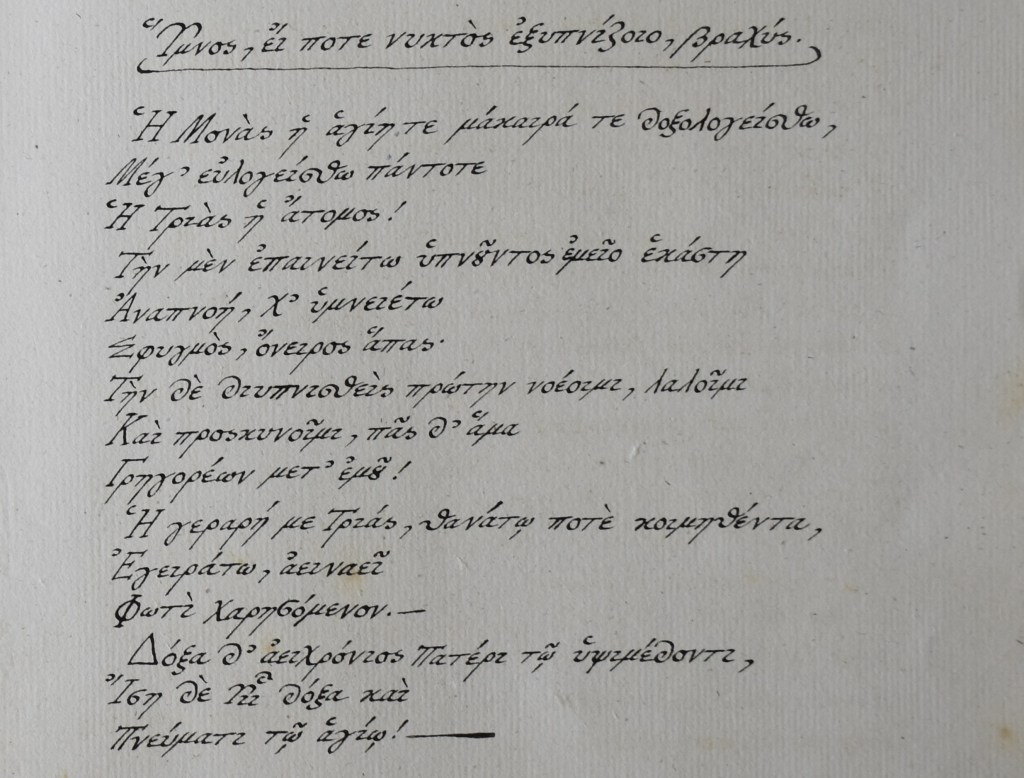
Although vernacular media often referenced the Trojan War, such as in public theatre plays by rederijkers, in prints, or in vernacular histories, the most direct and obvious engagement with Troy occurred in humanist works. One of these is a booklet of Neo-Latin and New Ancient Greek poetry, published in Zwolle in the wake of the Guelders Wars. The booklet was produced in 1553 by Joannes Telgius, a schoolmaster born in Apeldoorn about whom little is known. He titled the work ΑΛΗΚΤΩ SIVE SOMNIVM furoris bellici, quo nunc passim mundus tumultuatur. In this multilingual title, Telgius hints at the New Ancient Greek and Neo-Latin poetry inside and introduces his topic: a dream of the rage of war that currently shook up the world, stirred by Alecto, one of three Greek furies.

It is made up of several parts, with the first part in Latin: a dedicatory letter to the youth of Zwolle (iuuentuti Suollanae; A1), an elegy by Telgius of 234 lines, a Distichon cuiusdam docti of 2 lines, a Latin-language Παρανετικὸν to the Muses of 44 lines, and a Latin EXPOSTVLATIO PESTILENTIAE or ‘Complaint about the famine’ of 46 lines. These are then followed by works in New Ancient Greek, namely a translation of the first section of Telgius’ long elegy (6 lines) and a summary of its remainder (2 lines), an ode to the youth of Zwolle (12 lines), and a ‘summary’ of a prayer to God (6 lines).

The collection was directed at the youth of Zwolle to teach them a “poem for Saint Martin” (carmen Martinianum; A1), one that should stick with them. As every student was made to buy a booklet, they could consult it as they grew up (nostram operam boni consule; A1). From its successive poems, we can gather a clear point. The youth of Zwolle were to understand the horror of war and to stop it, similar to Trojan heroes. It was 19 years later, before most of Telgius’ students had reached the age of forty, that Zwolle would be massacred by the Spanish general Don Frederik (1537–1585). Through arrangement of the poems and their development from Neo-Latin to New Ancient Greek, the booklet supports Lamers’ theory on Ancient Greek as a symbol of Dutch liberty.

Figure 2. Title page of Telgius’ Ἀληκτώ (1553).

Step one was to establish the scene. In the first poem, Telgius’ long Latin elegiac, he recounts the Guelders War and complains that “the golden peace has quietly left the lands it hates” (tacite exosas linquit pax aurea terras; A2, recto). The reason is simple. Charles V sought to expand his territory, moving towards France first. Telgius writes: “Don’t you see that Charles surrounds you with many kingdoms on all sides, by land, by sea?” (Nonne uides Carolum numerosis undique regnis / Cingere te terra, cingere teque mari?; A2). The war spreads across the world, with devils coming out as “incurable fury, known across this criminal world” (furor insanus, scelerato notus in orbe; A2).

Step two was to introduce Trojan heroism into the mix. Telgius does this in two steps. First, a Latin Παρανετικὸν to the Muses, anonymous but possibly written by Telgius himself tells us of past empires turned to ruin. War threats to wipe out Zwolle, as it had Rome, Alexander the Great’s empire, and Troy.

Magna fuit quondam Romanae gloria gentis,
Magna, sed è medio lenta ruina tulit.
Pellaeo iuueni, cui non suffecerat orbis,
Quid superest regis nomen inane nisi?
Somnia sunt Hector, nihil huius uictor Achilles, [...]
Once, the Roman race enjoyed great glory,
great, but a slow ruin destroyed it,
and that youngster of Pella, for whom the world did not suffice,
What is now left of this king except his hollow name?
Hector is a mere dream, his victor, Achilles, is nothing anymore [...]
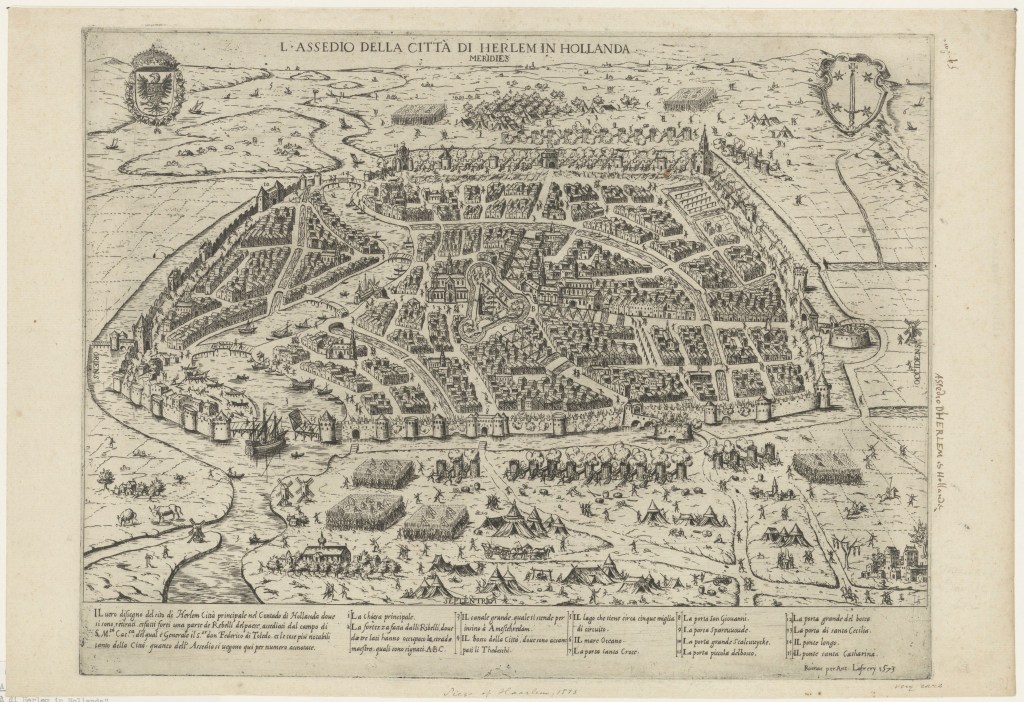
Figure 3. Map of the siege of Haarlem, based on a copper engraving by Antonio Lafreri (1573).

In part, the poem has a didactic aim. The poet hopes to incite the youth of the city to study the arts and to realise that, even in the midst of war, learning serves its purpose. At the same time, the concurrent theme of the horrors of war and the need to respond sticks.

The final Latin poem of the collection, an equally anonymous Expostulatio Pestilentiae, or ‘Complaint by Pestilence’, returns to the horrors of war from the perspective of Pestilence itself. Among other things, the personification asks whether “the Trojans, pained by the harsh lash of a whip, did not know why they were being hurt?” [Non sapiunt Phrygii duro nisi verbere caesi / cur?]. As the poems frequently return to the Trojan War as a frame of reference for war-torn Zwolle, we reach a shift in language.

The first of the New Ancient Greek poems is a translation of the opening of the booklet made by Boetius Epo (1529–1599), a Frisian scholar with ties to the Collegium Trilingue, who was working in Zwolle at the time.[iv] His translation eases the students into the linguistic shift, by recalling the core idea that λάθρα Εἰρήνη κατελείψατο χρύσεα γαῖαν [“the golden Peace has secretly left the land”]. As the booklet itself attests, these few Greek verses were even meant to be sung by the students (decantandum pueris; A4). The following ὨΔΗ ΤΩΝ ΝΕΩΝ ΖΟΥΩΛΛΑΙΩΝ [“Ode on the Youths of Zwolle”; A5] was written by a local man with ties to humanist circles in Leuven, the humanist Stephanus Mommius, who eventually became rector in Zwolle.[v] He laments Ares and his love for strife (ἔρις) and πόλεμοί τε μάχαι τε – a reference to Iliad 5.891. Centralising the Iliad, Mommius presents the violence of the Guelders War through its similarity to the strife, wars, and battles Troy. This takes us a step further than the earlier evocations of Troy in the Latin-language poems. Ancient Greek becomes a language of remembrance, of heroism, of resistance against Habsburg Spain.

Σχέτλιε καὶ βροτολοιγὲ Ἄρες τε βιοφθόρε δαῖμον
ἀεὶ γάρ τοι ἔρις τε φίλη πόλεμοί τε μάχαι τε
καὶ μέροπας μαχέσασθαι ἐνὶ κρατερῇ ὑσμίνῃ
Merciless, plague of humans, Ares, you life-crushing demon,
strife and war and battle are forever dear to you,
as is making humans battle through powerful combat.

The final poem of the collection continues these themes. The anonymous poet, perhaps Mommius, prays to God to “stop this evil strife so that / both the old and the young people will show you more honour” [ληγέμεναι δ’ ἔριδος κακομηχάνου, ὄφρα σε μᾶλλον / τιῶσιν λάοι ἢ μὲν νεοὶ  ἢε γέροντες] – adapting line 257 from book 9 of the Iliad. Noteworthy is the use of eris in both poems, an indirect, yet clear reference to the goddess Eris who was responsible for starting the Trojan War.

If we are to believe that Telgius’ students paid as much attention to his publication as he wanted them to, they picked up a message along these lines: war and suffering were imminent, learning remains a worthwhile endeavour, and look to the past for inspiration – to the Romans, to Alexander, and especially to Troy. This booklet underscores Lamers’ (2023) point, as it turns Ancient Greek into a language of anti-Spanish resistance and remembrance of Spanish violence.

The Harlemias (1605)
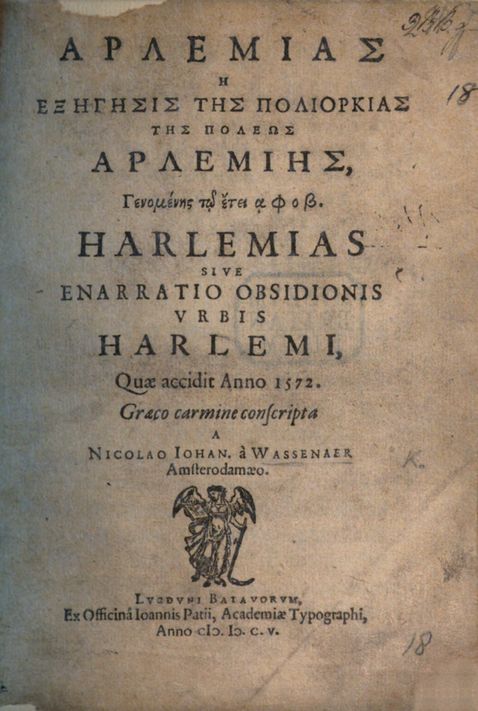
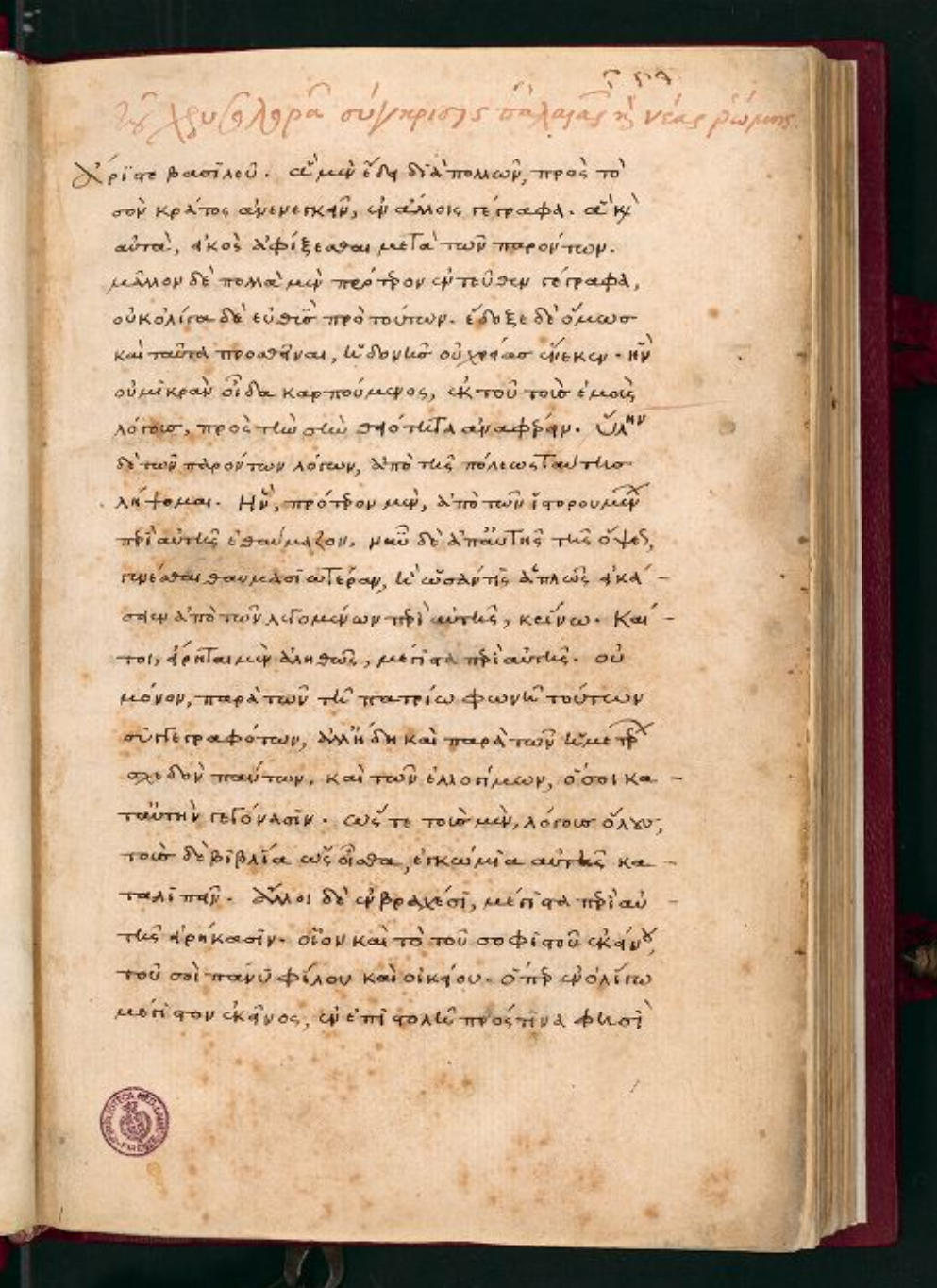
Figure 4. Title page of Nicholaas van Wassenaer’s Ἁρλεμιάς (1605).

The weight of Ancient Greek as a language of liberty and anti-Spanish resistance carried more heavily in the Ἁρλεμιὰς ἢ Ἐξήγησις τῆς πολιορκίας Ἁρλεμίης, Γενομένης τῷ ἔτει ͵α φ ο β [“The Harlemias or the Story of the Siege of Haarlem, which Occurred in the year 1572”]. Written by Nicholaas van Wassenaer in 1605, it is a New Ancient Greek epic of 1462 verses paired with a Latin translation propter Tyrones, for beginners (*2 verso), one of two New Ancient Greek epics to survive from the early modern Low Countries.[vi]

Like most Neo-Latin epics, the Harlemias is a poem of praise that sought to legitimise structures of power and the local status quo. What it sought to praise was not princely power, however, but Dutch power and liberty. After 1573, Haarlem was destroyed and sunk into religious conflict. By 1605, when van Wassenaer wrote his Harlemias, Haarlem and the broader Northern Low Countries of which it was part were in need of a shared story about anti-Spanish resistance and Dutch liberty. Homeric Greek not only portrayed this heroism by its Trojan associations, but also by its symbolic power as suggested by Lamers (2023).

I note here only two small points taken from the larger work. First, just like Telgius and Mommius, Van Wassenaer does not place blame for the ongoing wars squarely with the Habsburg kings, but also directs his attention at Eris. In lines 58-60, he writes:

Ἀλλ’ οὐ τοῦτ’ Ἔριδι θρασυμηχάνῳ ἥνδανε θυμῷ,
ἐς Βασιλῆα Φίλιππον ἀπῆλθ’ ἀπατήλια βάζειν,
βασκαίνωσα ἀποστάσεως τὴν Βελγίδα γαῖαν,
But this did not please Eris, manipulative as her heart is,
and to King Philip she went to speak her wily words to him,
claiming that the Belgian land wanted to revolt.[vii]

In a continuation of the sentiments we find in Telgius’ booklet, the Eighty Years’ War, too, must start like the Trojan War had done. Haarlem seems to suffer a fate similar to what Telgius had predicted for Zwolle. Both cities fell at the hands of the Spanish general Don Frederik, whom the Harlemias calls an ἀνδροφόνος [“killer of men”].

Second, a stock phrase is sprinkled across the Harlemias to underscore why the Dutch are fighting (back) against the Spanish. This core message encapsulates the ideals of the Harlemias. It is expressed in lines 76-77, lines 80-81, lines 162-163, lines 397-398, and line 1146. To quote but one, in ll. 80-81, we hear that the Dutch are fighting:

Κάλλιστόν γε δοκεῖ Βέλγαις φρεσὶ τοῦτο, μάχεσθαι
γῆς περὶ, παίδων τε, κτεάνων τε, ἐλευθερίης τε.
For it seemed the most beautiful thing to Dutch minds to fight
for their country, their kids, their possessions, their liberty.

This summary of the aims of the Dutch shows how strong the desire for liberty was. Although the passage in itself might not prove Lamers’ point, it is part of a larger symbolic value of Greekness that he has traced in the Pleumosias and that I believe to find in the Ἀληκτὼ sive somnium furoris bellici and Harlemias. According to this preliminary reading of these two texts, I argue the symbolic charge of Ancient Greek as a language of liberty holds up.

Conclusion

While my conclusion remains as careful and tentative as the one expressed by Lamers in his 2023 paper, I hope to have shown that the symbolic status of New Ancient Greek as a language of Dutch liberty and resistance has some sturdy legs to stand on. Not only the Pleumosias, but the Ἀληκτὼ sive somnium furoris bellici and the Harlemias use New Ancient Greek in a similar fashion. Their use of the language reveals how it served to create an independent Dutch identity, a feeling of resistance, and a heroic memory of a traumatic series of wars that would last decades more. When we study these works against the backdrop of popular works that continuously reference Troy, from histories and plays to songs and paintings, we also get a better view of the position New Ancient Greek had. Although writing and reading works in New Ancient Greek was, without question, an elite commodity and certainly not accessible to the large majority of people in the Low Countries, it did not exist in a cultural vacuum.

Figures
  • Figure 1. Map of the siege of Haarlem, from Braun and Hogenberg’s Civitates orbis terrarum (1575).
  • Figure 2. Title page of Telgius’ Ἀληκτώ (1553).
  • Figure 3. Map of the siege of Haarlem, based on a copper engraving by Antonio Lafreri (1573).
  • Figure 4. Title page of Nicholaas van Wassenaer’s Ἁρλεμιάς (1605).
References
  • Bleau, J. (1649) Toonneel der Steden van de Vereenighde Nederlanden, Met hare Beschrijvingen. Amsterdam.
  • Boers, B. (2013) “Een 16de-eeuws schoollied uit Zwolle.” Nieuwsbrief Stichting Vrienden van het Johan van Oldenbarnevelt Gymnasium Amersfoort no. 2: 15-19.
  • Duym, J. (1606) Een Ghedenck-boeck, Het welck ons Leert aen al het quaet en den grooten  moetwil van de Spaingnaerden en haren aenhanck ons aen-ghedaen te ghedencken. ENDE de groote liefde ende tou vande Princen uyt den huyse van Nassau, aen ons betoont eervvelick te onthouden. Leiden.
  • Kersten, T. (2023) “Een Nederlands Troje: Herdenking via homerische epiek in Nicolaas van  Wassenaers’ Harlemias.” In: De kracht der herinnering, edited by M. Clement, H. Mooiman, & I. de Smalen, 156-175. Utrecht.
  • Kersten, T. (under peer review) “Revisiting Multidirectional Memory: Associative Memory.”  Memory Studies Review.
  • Lamers, H. (2023) “A Homeric Epic for Frederick Henry of Orange: The Cultural  Affordances of Ancient Greek in the Early Modern Low Countries.” Humanistica Lovaniensia 72: 323-348.
  • Parrado, P.C. (2017) “Argutae et litteratae: una nueva mirada sobre el intercambio epistolar entre Francisco de Quevedo y Justo Lipsio (1604-1605).” In Quevedo en Europa, Europa en Quevedo, edited by J.S.A. Veloso, pp. 36-78. Vigo.
  • Telgius, J. (1553). ΑΛΗΚΤΩ SIVE SOMNIVM furoris bellici, quo nunc passim mundus tumultuatur. Zwolle.
  • Thomas, W. (2004) De Val van het Nieuwe Troje: Het Beleg van Oostende, 1601-1604.  Leuven.
  • van Wassenaer, N. Jnsz. (1605). ΑΡΛΕΜΙΑΣ Η ΕΞΗΓΗΣΙΣ ΤΗΣ ΠΟΛΙΟΡΚΙΑΣ ΤΗΣ ΠΟΛΕΩΣ ΑΡΛΕΜΙΗΣ, Γενομένης τῳ ἔτει ͵α φ ο β. HARLEMIAS SIVE ENNARATIO OBSIDIONIS URBIS HARLEMI, Quae accidit Anno 1572, Graeco carmine conscripta A NICOLAEO IOHAN. à WASSENAER Amsterdamaeo. Leiden.

Footnotes

[i] Lipsius’ letters to Quevedo are stored in the library of the Universiteit Leiden. They were recently made accessible by Parrado (2017). The reference to Catullus is drawn from carmen 68, line 89, where the poet curses the city for its association with death.

[ii] Kersten, under peer-review. The principles behind this theory were already expressed in Kersten 2023.

[iii] For Breda, inter alia J. Duym, Ghedenck-boeck (1606). For Oostende, inter alia J. Bleau, Toonneel der Steden (1649). Cf. Thomas 2004.

[iv] Boetius Epo (https://www.dalet.be/person/83) taught Hesiod and Homer in Leuven and also edited a book on Homer that was published in Leuven in 1555.

[v] Stephan Mommius (https://www.dalet.be/person/563) also wrote a liminarium for the Hebrew grammar of Joannes Isaac, published in 1557.

[vi] For the second, the Pleumosias, see the work by Lamers (2023). The work is currently under study by Han Lamers (Rome / Oslo) and Dries Nijs (Leuven).

[vii] The word form βασκαίνωσα is a dialectal variant of the standard (Attic) βασκαίνουσα. It illustrates how Van Wassenaer imitates the Homeric dialect. He also applies dialect forms to his neologisms, such as Βαταβοστυγέεσσιν (‘Haters of Dutchmen’) in Aeolic dialect.

How to cite

Kersten, Thijs. 2026. “Trojan Heroes of the Eighty Years’ War (1568–1648): New Ancient Greek, Liberty and Remembrance” Hermes: Platform for Early Modern Hellenism (blog). 1 February 2026.

Deposit in Knowledge Commons: https://doi.org/10.17613/hs6jt-zpy30
A Woman Writing New Ancient Greek Poetry for a Leiden Disputation (1686)

Dries Nijs (KU Leuven)

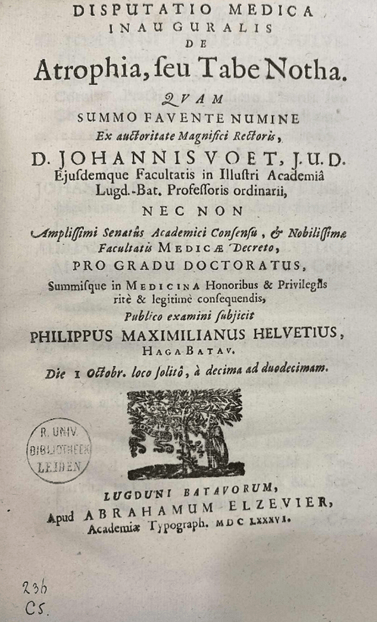
Leiden University library houses an extensive collection of printed disputationes. These broadsheets and pamphlets present the theses that university students — the respondentes — defended against opponentes, under the supervision of a professor acting as praeses. This corpus extends from shortly after the founding of Leiden University (1575) into the 20th century, filling several bookcases in the Special Collections.1 Next to the theses, primarily in Latin, these ephemeral academic prints contain liminary dedications and congratulatory poems in a range of vernacular and learned languages. A medical disputation from 1686 features one of the most remarkable felicitations: a New Ancient Greek poem by an unknown woman, Margareta Ripen.

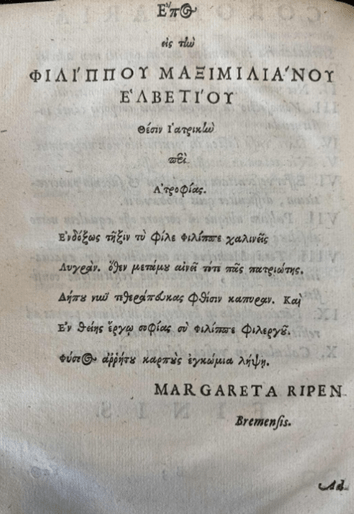
Figure 1 – Title page of Philippus Maximilianus Helvetius’ disputation on atrophy

The professors, students and acquaintances attending the medical disputation of Philippus Maximilianus Helvetius on 1 October 1686 in Leiden, must have paused in surprise when, leafing through the pamphlet printed for the occasion by Elsevier, they encountered at the end—among the usual congratulations in Latin and Dutch—a New Ancient Greek poem written by a woman.2  The majority of the audience, no doubt, could not read the Greek text, let alone understand its meaning. Yet we can imagine that they were struck by the learned and exotic language in which it was written—and even more so by the signature, which identifies a female author: Margareta Ripen of Bremen. Poetry in New Ancient Greek is relatively rare, especially in the final decades of the seventeenth century. The production of Greek gratulatory verses for disputations peaked in Leiden around 1600, but soon receded to the margins, where it seems to have stagnated as a peripheral phenomenon throughout the seventeenth century. Of all 1708 poems in Leiden disputations that I have been able to trace up to the year 1700, only 42 (2,46%) are in Greek, with their proportion decreasing in the last quarter of the century compared to Latin and vernacular verse. Within this context, Margareta Ripen’s poem is all the more exceptional: it is not only the sole Greek composition among the forty-five carmina gratulatoria from 1686, but also the only New Ancient Greek poem written by a woman, at least within the corpus of the early modern Low Countries, which is currently being mapped by the HellBel project at KU Leuven.

Little is known about this Margareta Ri(jp)pen or her connection to Philippus Maximilianus. Her name appears at the end of three other liminaria in Latin: two poems for Petrus Rabus’ translations of Herodian3 and Ovid,4 and a dedication to his son Guilielmus in a schoolbook of fables.5 The latter signature includes an additional surname: Margareta Harwich Ripen Bremensis. This points us to her husband, Maternus Harwich, teacher at the Latin school of Rotterdam and author of a bilingual schoolbook on rhetoric.6 The couple had two children, one of whom—a son named Sophronius—was baptized in Rotterdam on 11 June 1682.7 Rotterdam seems to be the only place to which Margareta can be linked, as no trace of her self-proclaimed Bremen origins is known. She appears to have died young and was buried in that same city on 27 December 1694, leaving her children still underage.8

Figure 2 – Margareta Ripens gratulatory poem
Ἔπος9 
εἰς τὴν
Φιλίππου Μαξιμιλιανοῦ
Ἑλβετίου
θέσιν ἰατρικὴν
περὶ
Ἀτροφίας
Ἐνδόξως τῆξιν τὺ φίλε Φίλιππε χαλινοῖς
λυγράν, ὅθεν μετά μου αἰνεῖ τότε πᾶς πατριώτης.
Δήπου νῦν τεθεράπευκας φθίσιν καπυρὰν. Καὶ
ἐν θείης ἔργῳ σοφίας σὺ Φίλιππε φιλεργοῦ.
Φύσεος ἀρρήτου καρποὺς ἐγκώμια λήψῃ.
Margareta Ripen
Bremensis
Poem
for
Philippus Maximilianus
Helvetius’
medical thesis
on
Atrophy
Gloriously, dear Philippus, you restrain the 
mournful tuberculosis, for which together
with me, every compatriot praises you. Surely
now you have cured the drying phtisis.10 And
be industrious, Philippus, in this work of
divine wisdom. As praise, you will reap
the fruits of ineffable nature.
Margareta Ripen
of Bremen

Although the author of these verses is exceptional, their content and poetic quality are not. Like other New Ancient Greek occasional poetry of this period, the text shows several errors against the Greek, its accentuation and printing, listed in the footnotes below. The dactylic hexameter used here is one of most common meters for this kind of poetry, likely chosen for its solemn tone as well as its relative accessibility and straightforwardness. The content is like that of most gratulatory poems in disputations: somewhat superficial flattery, generic and derivative. Typical features are the wordplay on the respondent’s name (φίλε Φίλιππε, Φίλιππε φιλεργοῦ), the repeated reference to the disputation’s subject (τῆξιν, φθίσιν), the intertextual engagement with (late) antique or early Christian sources, usually only superficial (Φύσεος ἀρρήτου καρποὺς11), and the excessive praise of the student’s achievement, which is said to have a revolutionary impact on society as a whole and possess a divine quality. In this way, even though it was written by a woman, this poem is a textbook example of the Greek gratulatory verses found in early modern disputations. Their significance lies not in what they say, nor in how well they say it, but simply in the language they use.

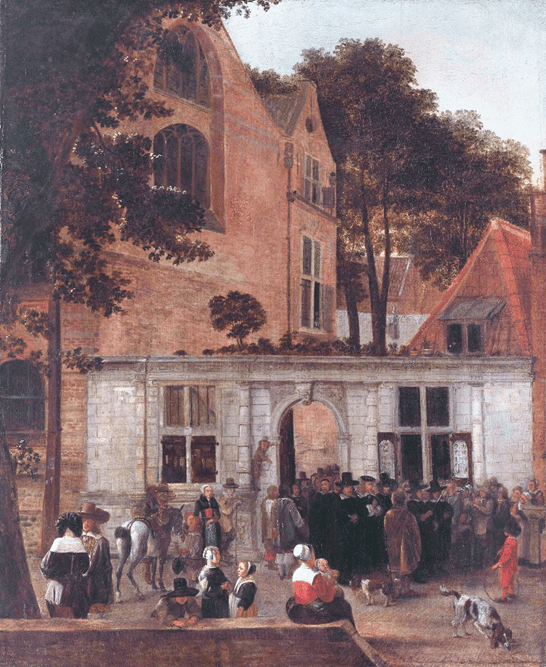
Figure 3 – Promotion at Leiden University, Hendrick van der Burgh, circa 1650

The practice of including gratulatory poems in disputations served as a form of self-presentation. Through these poems, students and authors could shape their imago, show off their learned connections and define their position in the intellectual network of Leiden University. The choice of writing or including Greek texts was relatively exceptional, offering a way to stand out further and distinguish oneself among the more conventional Latin and vernacular felicitations. By choosing Greek, authors and students demonstrated that they belong to an in-group of Hellenists who possess an extraordinary kind of cultural capital:12 knowledge of a learned language and literature incomprehensible for the broader public. In this context of impressing peers and standing out among them, a Greek poem written by a woman is of course especially striking. We can only speculate about the audience’s reaction to this specific poem, but since learned women were already admired and regarded as extraordinary at the time,13 it is easy to imagine that this composition made an especially powerful impression, lending Philippus Maximilianus and his disputation a distinctly erudite and exceptional aura.


Footnotes
  1. My research on this collection was made possible by a Brill Fellowship at the Scaliger Institute in Leiden in the summer of 2025, for which I express my gratitude.
  2. Philippus Maximilianus Helvetius (1665–1708), the third son of Johann Friedrich Schweitzer, settled as a city physician in Middelburg after completing his studies. In 1704, he was appointed military doctor in Zeeuws-Vlaanderen, and later became lecturer in anatomy in Rotterdam. In addition to this disputation on atrophy, he wrote a handbook for midwives entitled Teel-thuin van ’t menschelijk geslagt (Leiden, Frederik Haaring, 1698). Cf. also Molhuysen, P.C. & Blok, P.J. (1914) Helvetius, Philippus Maximiliaan. In Nieuw Nederlandsch biografisch woordenboek (Deel 3, p. 573); A. W. Sijthoff. and Van Heiningen, T. W. (2014) La dynastie des Helvétius. Histoire des Sciences Médicales, 68(4), 447–456.
  3. Herodianus’ Acht boeken Der Roomsche Geschiedenissen. Rotterdam, Isaak Naeranus, 1683.
  4. Publii Ovidii Nasonis Metamorphoseωn Libri XV. Rotterdam, Reinier Leers, 1686. With multiple reprints.
  5. Compendium Fabularum, quae serviunt ad intelligentiam Virgilii, Ovidii, Senecae, Homeri, Euripidis et aliorum in usum scholarum. Rotterdam, Petrus vander Slaart, 1695. Reprinted in 1705.
  6. Orator Belgico-Latinus, demonstrans quo laboris compendio eloquentiæ candidatus ad oratoriam pervenire possit. Amsterdam, Jakob van Royen, 1701. The work was reprinted in 1729 and is in fact a translation of the first chapter of Christian Weise’s Politischer Redner (Leipzig 1679). Cf. also Meerhoff, K. (2020) Le persiflage enseigné en classe de rhétorique (L’Orator Belgico-Latinus, 1701). In C. Deloince-Louette & C. Noille (ed.), Expériences rhétoriques. Mélanges offerts au professeur Francis Goyet, pp. 55–68. Classiques Garnier.
  7. Rotterdam City Archives: https://hdl.handle.net/21.12133/19932BEACB6546FE9B142335776CAC53
  8. Rotterdam City Archives: https://hdl.handle.net/21.12133/03CFE518D3104E66873E33219B8D7E4F
  9. Text: Disputatio medica inauguralis de atrophia, seu tabe notha quam, summo favente numine, ex auctoritate magnifici rectoris D. Johannis Voet, I.U.D., eiusdemque facultatis in illustri academia Lugduno-Batava professoris ordinarii, necnon amplissimi senatus academici consensu et nobilissimae facultatis medicae decreto, pro gradu doctoratus summisque in medicina honoribus et privilegiis rite et legitime consequendis, publico examini subicit Philippus Maximilianus Helvetius, Haga-Batavus, die 1 Octobris, loco solito, a decima ad duodecimam, Leiden, Abraham Elsevier, 1686, B3v. Crit.: title Μαξιμιλιανοῦ] ΜΑΞΙΜΙΛIA´ΝΟΥ  ἰατρικὴν] Ι῾ατρικὴν  1 Φίλιππε] Φιλίππε χαλινοῖς] χαλινεῖς 2 μετά μου] μετάμου 3 καπυρὰν] καπυραν || 4 Φίλιππε] Φιλίππε || 5 ἀρρήτου] ἀῤῥήτου.
  10. Old scientific term for tuberculosis, attested in Ancient Greek texts by authors such as Hippocrates and Galen and commonly used in similar seventeenth-century disputations.
  11. The expression Φύσεος ἀρρήτου καρποὺς has parallels in several early Christian writings. In this case it might have been drawn from Cyrillus of Alexandria’s de sancta trinitate dialogi, 395 d, 25, of which Bonaventura Vulcanius owned a manuscript and made a Latin translation in Leiden. Cf. De Durand, G. M. (1976). Cyrille d’Alexandrie. Dialogues sur la Trinité, Tome I. Cerf; Codex Vulcanianus 52 & 12, Leiden University Library.
  12. The concept of cultural capital was coined by Pierre Bourdieu and refers to non-financial assets like knowledge, skills, education, and tastes that can be used to demonstrate one’s cultural competence and social status. Cf. Bourdieu, P. (1977). Cultural Reproduction and Social Reproduction. In J. Karabel, & A. H. Halsey (ed.), Power and Ideology in Education, 487–511. Oxford University Press.
  13. A notable example is Anna Maria van Schurman, Europe’s first female university student and, with her letters in the Opuscula (Leiden, Elsevier, 1648), the only other female author of New Ancient Greek in the Low Countries we could identify so far. She was widely celebrated and honored as the tenth muse and the virginum eruditarum decus. Cf. notably the research of Pieta van Beek.
Figures
  • Figure 1: Title page of Philippus Maximilianus Helvetius’ disputation on Atrophy (ustc 1836756). UBL, Special Collections, 236 C 5:33
  • Figure 2: Margareta Ripen’s gratulatory poem (UBL, Special Collections, 236 C 5:33, B3v)
  • Figure 3: Promotion at Leiden University, Hendrick van der Burgh, circa 1650, Rijksmuseum Amsterdam
Further reading
  • Ahsmann, M. J. A. M. (1990). Collegia en colleges: juridisch onderwijs aan de Leidse Universiteit 1575-1630 in het bijzonder het disputeren. Wolters-Noordhoff.
  • Lamers, H. & Van Rooy, R. (2022) Graecia Belgica: Writing Ancient Greek in the early modern Low Countries. Classical Receptions Journal, 14(4), 435-462.
  • Van der Woude, S. (1963) De oude Nederlandse dissertaties. Bibliotheekleven, 48, 1-14.
  • Van Rooy, R. (2023). New Ancient Greek in a Neo-Latin World. Brill.
How to cite

Dries, Nijs. 2025. “A Woman Writing New Ancient Greek Poetry for a Leiden Disputation (1686).” Hermes: Platform for Early Modern Hellenism (blog). 1 December 2025.

Deposit in Knowledge Commons: https://doi.org/10.17613/5gyan-3p804

Laonikos Chalkokondyles: The Last Byzantine Historian and the Dawn of Ottoman Historiography

Riccardo Stigliano (Universität Innsbruck)

Should the last Byzantine historian be considered an early modern Hellenist? Yes, because he lived through the crucial years of the fall of Constantinople. After all, he started writing as soon as Constantinople fell, which was at the very beginning of the Modern Age. Yes, if we consider the literary genre with which he engaged and the classical spirit with which he approached it. Indeed, yes, if we take into account not only the chronology of his work, but also the cultural climate in which he operated.

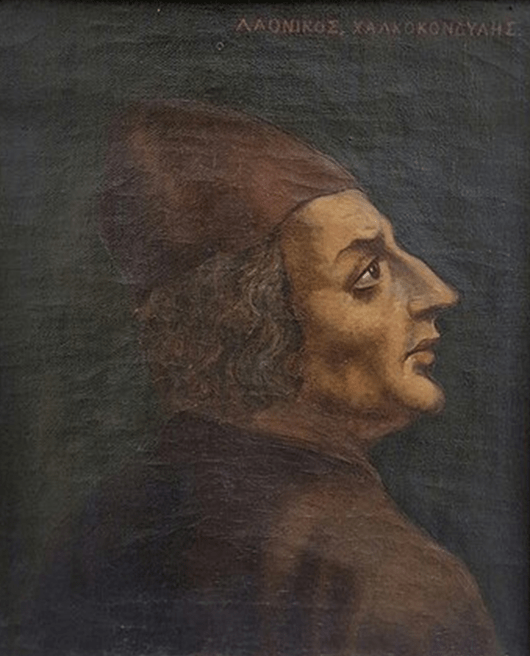
Laonikos Chalkokondyles, also known as Nikolaos Chalkokondyles, stands as one of the principal chroniclers of the fall of Constantinople. His ten-book work, Demonstrationes historiarum (Ἀποδείξεις Ἱστοριῶν), covers the period from 1298 to 1463, and offers a profound historical account that reaches beyond a simple chronological narration. Although primarily known for his account of the demise of the Byzantine Empire, his historiographical approach offers insights into the rise, expansion, and consolidation of the Ottoman Empire, which he presents as a major force in the formation of European modernity.

Early modern painting of Laonikos Chalkokondyles National Historical Museum of Greece

Chalkokondyles was born into an aristocratic family with close ties to the Florentine Acciaiuoli family, who controlled the Morea during the final years of the Byzantine Empire. His familial connections placed him at the intersection of Byzantine decline and the rising Ottoman power. It is in this context that Chalkokondyles’ work emerges not merely as a chronicle of events but as a critical analysis of the changing political and cultural landscape of the Eastern Mediterranean.

A chronicle not of Byzantine demise but of Ottoman expansion

Chalkokondyles’ Demonstrationes historiarum is not simply a detailed account of the fall of Constantinople but a broader investigation into the history of the Ottoman Empire and its impact on the Byzantine world. On the one hand, stylistically, Chalkokondyles draws on the prose of Thucydides. On the other hand, his narrative approach and content clearly echo Herodotus. In fact, his work blends historiography with ethnography, offering a nuanced examination of the peoples and cultures that shaped the Empire. In this sense, Laonikos transcends the role of a mere chronicler of Byzantine decline. Instead, he assumes the role of an investigator (the first meaning of the term ἱστορία), delving into the rise and consolidation of the Ottomans as they supplanted the Byzantine Empire.

Like a new Herodotus, his approach to the Ottoman Empire is particularly noteworthy: while many of his contemporaries and successors focused on the fall of Constantinople as the defining moment of Byzantine – and European – history, Chalkokondyles frames the Ottomans not merely as an external threat but as a dynamic force in the development of continental modern history. His history of the Ottomans is not limited to military conquests but extends to cultural exchanges and the interactions between different peoples under Ottoman rule. This approach broadens the scope of his narrative, presenting the Ottomans as a complex and multifaceted entity, and underscores Laonikos’ understanding of his Empire’s transformation into a new socio-political order.

The Herodotean legacy

While some have rightfully called him the “Thucydides of Greek Humanism”, it is crucial to emphasize one important methodological aspect of his work: his adherence to a Herodotean principle of impartiality. Although Chalkokondyles is not always the most reliable historian, he does strive for a balanced perspective in his judgments. His history is marked by an attempt to understand the motivations behind the rise of the Ottomans, rather than merely recording events as they happened. This intellectual curiosity reflects the classical tradition of seeking not just to record history but to understand its causes and consequences. By framing his work as both an ethnographic and historical investigation, Laonikos echoes the methods of both Herodotus and Thucydides, blending narrative with analysis in a way that was ‘novel’ for his time (at the end of the Middle Ages), but at the same time ‘traditional,’ since it was the ancient method of history writing. In this respect, Chalkokondyles is truly a humanist, reasonably an early modern Hellenist.

The reception of his work

Often confused with his more famous cousin Demetrios Chalkokondyles and frequently compared to his contemporaries (the last Byzantine historians and chroniclers), Laonikos remains largely unknown, both within the field of late Byzantine literature and in the realm of humanist literature, which was primarily produced in the West and in Latin. The question of where Laonikos wrote his history is a subject of scholarly debate, as is even his own name! The traditional view holds that he composed it either in exile in Crete or in Italy shortly after the conquest of Constantinople. However, a recent hypothesis by Anthony Kaldellis suggests it was authored in Constantinople at the very heart of the Ottoman court. Thus, Laonikos’ legacy is further complicated by the dual identities preserved in tradition: Laonico Calco(co)ndila (his Italianized name) and Nikolaos (his Greek name). The Demonstrationes historiarum were predominantly read in a Latin translation (1556) by Konrad Klauser, whose version was so faithful to the original that it did not Latinize the Greek names or render them in a Western style. This translation became the standard for scholars studying the Ottoman expansion, and even major orientalist works, such as Joseph von Hammer-Purgstall’s History of the Ottoman Empire (1827–1835), relied on Klauser’s Latin text, not the Greek original.

As mentioned above, it is unclear whether Chalkokondyles wrote his work in the remaining Venetian territories in Greece or in Constantinople, as some scholars, such as Kaldellis, have suggested. Nevertheless, it is notable that, of the four leading historians of the fall of Byzantium, Chalkokondyles has received comparatively little attention, particularly in the West. This is largely due to the challenging style and language of his writing. In Italy, for instance, Laonikos’ presence is largely a historiographical reconstruction based on the fact that his cousin Demetrios resided on the Italian peninsula. Nevertheless, Chalkokondyles’ work remains essential for understanding the fall of the Byzantine Empire and the rise of the Ottoman Empire.

A historical vision in transition

 Chalkokondyles’ work can be considered as a bridge between the classical tradition of Greek historiography and the early modern understanding of the Ottoman Empire. His treatment of the Ottomans as both a political and cultural entity, rather than simply a military conqueror, reflects the beginning of a new intellectual perspective, one that recognizes the complexity of history and the interplay of different civilizations.

Map of Constantinople in the 1662 French translation of Chalkokondyles’ Demonstrations of History

Moreover, his examination of the Ottoman state reflects the intellectual climate of the time. Whether Laonikos composed his Demonstrations of History in Italy is debatable. Instead, Laonikos seems to have observed the new Ottoman masters of Constantinople from the city itself rather than as an exile observing from afar. This is reflected in the paradoxical ideological efforts of his mentor, Georgios Gemistos Plethon, to create a new ethnic identity for the fatigued and exhausted Eastern Roman Empire. The idea of Romanitas and Rome, though transformed into “Romanism” and transplanted to the “New Rome,” no longer functioned after the atrocities of the Fourth Crusade and the Latin occupation of the Empire. Plethon, under whose tutelage Laonikos studied, proposed a new, Platonically pagan national identity rooted in elements that had predated foreign conquests, long before the creation of Greco-Roman classical culture. In essence, one should look at Greek classical identity alone.

Thus, despite these efforts – which are perhaps more of a temptation than a certainty – Laonikos remained open to the possibility of viewing the Ottomans not just as conquerors, but also as an alternative embodiment of Greek identity. On the one hand, the Latins, also known as the Franks, claimed the Eastern territories in the name of a long-dead Roman Empire (the Fourth Crusade). In contrast, the Ottomans maintained a state apparatus that incorporated various peoples, religions and languages. One vision sought to impose order under the dominance of Latinity and Roman rites, while the other offered an administration uninterested in the Eastern schism and the language of the conquered people, and more focused on their territories.         
It is worth noting that these were the same Ottomans against whom the Greeks would later wage a war of liberation, and that they had no particular interest in converting the Greek population to Islam. However, it appears that Laonikos studied the origin, expansion and state organisation of the Ottomans from the walls of Constantinople in order to understand what his people might expect under their new rule. In other words, he wondered whether the Greeks would still be permitted to remain Greek at the beginning of a new era.

Conclusion

This “Herodotus of Byzantium”, the last Byzantine historian, can no longer be confused with the homonymous academic historian from Milan. He should not be considered merely a chronicler of the fall of Constantinople, nor an inaccurate continuator of his predecessor’s chronicles. Ultimately, Laonikos deserves to be recognised as an investigative historian in his own right. Otherwise, we risk making further mistakes about his role in the final stages of Byzantine historiography and the early years of the Ottoman Empire.

Figures
References
  • Kaldellis, Anthony. “The Date of Laonikos Chalkokondyles’ Histories.” Greek, Roman, and Byzantine Studies 52 (2012) 111–136.
  • Kaldellis, Anthony: “The Interpolations in the Histories of Laonikos Chalkokondyles.” Greek, Roman, and Byzantine Studies 52 (2012) 259–283.
  • Kaldellis, Anthony. “The Greek Sources of Laonikos Chalkokondyles’ Histories.” Greek, Roman, and Byzantine Studies 52 (2012) 738–765.
  • Kaldellis, Anthony. Laonikos Chalkokondyles, The Histories, 2 vols. Cambridge: MA/London, 2014 (English translation).
How to cite

Stigliano, Riccardo. 2025. “Laonikos Chalkokondyles: The Last Byzantine Historian and the Dawn of Ottoman Historiography.” Hermes: Platform for Early Modern Hellenism (blog). 1 October 2025.

Deposit in Knowledge Commons: https://doi.org/10.17613/v1vec-88257

Laudes urbium, ἐγκώμια φίλων: Two friends writing city encomia and congratulating each other

Adriaan Demuynck (KU Leuven / FWO)

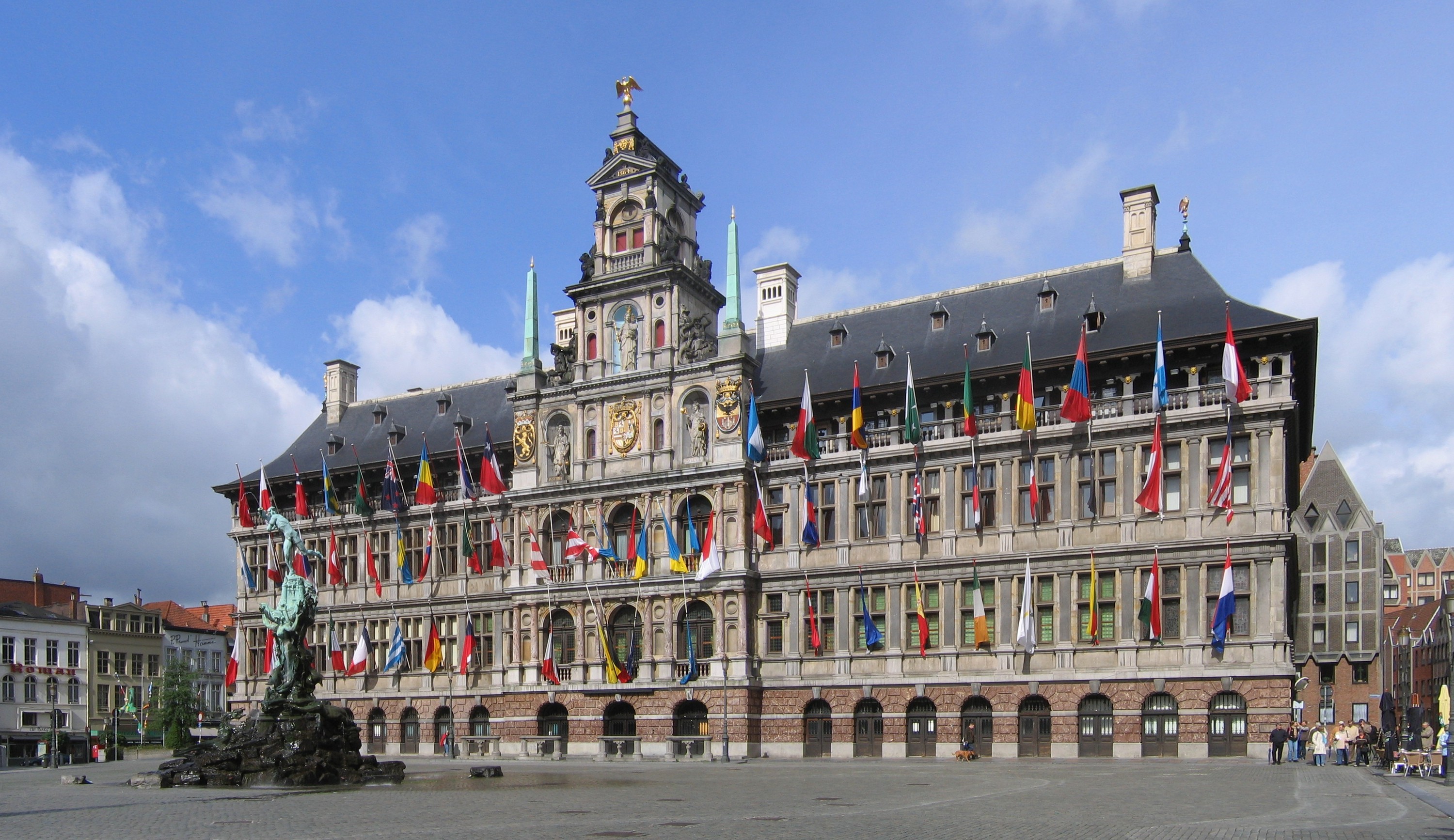
On 27 February 1565, the new city hall of Antwerp was formally inaugurated, exactly four years after the first stone was laid. To adorn the opening of this prestigious Renaissance building, two young poets joined forces and wrote a collection of city encomia or laudes urbis on the city of Antwerp. The first poet, Georg Schrögel (Georgius Schroegelius), was a stranger in Antwerp: he was born in the Bavarian town Neudek (present-day Nejdek in Czechia) and had only arrived six months earlier in the port town on the river Scheldt.1 His English friend Daniel Rogers (Daniel Rogerius), on the other hand, had strong familial ties to Antwerp, since his mother was born there. Rogers wrote a Latin Oda Sapphica and nine other poems in honor of Antwerp, but these were an appendix to the magnum opus of Schrögel: a 714-line laudatory poem, titled Elegia ἐγκωμιαστικὴ in clarissimam et praestantissimam Belgarum urbem Handoverpiam Georgii Schroegelii Boii (‘Elegy in praise of the most renowned and excellent city of the Belgians, Antwerp, by Georg Schrögel from Bavaria’), written entirely in Ancient Greek.

The collection of city encomia was printed by Christophe Plantin in January 1565, just in time for the inauguration of the city hall. The laudations of Schrögel and Rogers graced this ceremony, and especially Schrögel’s Greek poem must have added lustre to this event. Understandably, the two young authors devoted ample attention in their poems to the description of the new city hall. Rogers wrote a Latin poem titled De curia nuper extructa, seu de domo civica, which compares the new city hall to the seven wonders of the ancient world. Schrögel included an ecphrasis of the building in his Greek poem, which opens with these verses (ll. 149-158):

Ἐν μέσσῃ ἀγορᾷ τὸ πολιτικὸν οἰκοδόμημα,

φύει χρυσοφαές, θαμβάλεον μέγεθος

ὅττι ὑπερτέλλει οἴκων πανυπείροχον ἄλλων,

θάμβος καὶ παρέχει πᾶσι βροτοῖσι μέγα.

Τοῦ μῆκος μὲν ἀπειρέσιον, πλάτος ἄπλετόν ἐστι,

τοῦ δὲ κάρηνα τρέχει οὐρανὸν αἰπύτατον.

Ἠΰτ’ ἐν ἀκροτάτῳ τῷ οὔρει πῦρ ἀΐδηλον

καίεται, οὕ οὗ αὐγὴ λάμπει ἐπ’ ἄστρα πόλου·

ὣς αἴγλη φαιδροῦ διὰ αἰθέρος εὐρὺν ῎Ολυμπον

ἥκει χρυσαυγοῦς παμφανόωσα δόμου.

[…]
Georg Schrögel, Elegia ἐγκωμιαστικὴ, fol. B3v
“In the middle of the market stands the city hall, it shines with gold, a marvelous grandeur as it towers above the other houses, evoking great awe in all mortals. It is immeasurable in length, gigantic in width, its roof running across the highest heavens. Just as a devastating fire rages on the mountaintop, its glow reaching the stars in the sky, so too does the brilliant radiance of the golden-shimmering house pierce through the clear air up to the broad Olympus.”2

On the page preceding the start of the Greek city encomium, Rogers wrote a short poem in Latin to congratulate Schrögel on his tour de force. In his wishes, Rogers emphasizes the fact that Schrögel wrote his encomium in Greek. This way, the immigrant Schrögel surpassed earlier, local poets like Cornelius Grapheus and Melchior Barlaeus who had praised Antwerp in Latin.

In Elegiam Handoverpianam Georgii Schroegelii Boii.

Docta tuas laudes facundi Musa Graphaei

ante dedit Latiis urbs generosa notis:

nunc tibi Schrogelii laudes decantat easdem

Pieris, imparibus vecta Pelasga rotis.

Scilicet Aonio celebrandis carmine divis

laudibus et meritis nata Thalia fuit.

Dummodo tu facias dignum Respublicae laude,

Pierii deerit non tibi turba chori.

Daniel Rogerius

Georg Schrögel, Elegia ἐγκωμιαστικὴ, fol. A4v
“On the Elegiac Poem on Antwerp by Georg Schrögel of Bavaria.

Earlier the learned Muse sung your praise through the Latin characters of the eloquent Graphaeus, eminent city. Now the Pierian goddess sings through Schrögel praise for you, again, but this time it is a Greek muse, carried on unequal wheels. Certainly, Thalia was born to celebrate gods with Aonian poetry and deserved praise. As long as you do what is worthy of praise, dear Republic, you will not lack a Pierian choir.
Daniel Rogers.”3

After writing the laudations on Antwerp, Rogers seems to have acquired a taste for laudes urbium. Some ten years later, Rogers wrote a collection of 35 Latin poems on 31 English cities like London, Oxford and Coventry, fittingly titled Urbes. The collection remains unpublished and is preserved in a hefty manuscript containing plenty of writings by Rogers, now kept at the Huntington Library in San Marino (CA), USA (mssHM 31188). This time Schrögel returned the favour to Rogers, embellishing the collection of city encomia with a laudatory poem for his friend Rogers. Schrögel sticked to the language of which he had showcased his proficiency earlier, Greek. As a result, the language distribution in the Urbes is reverse compared to the Elegia ἐγκωμιαστική: a Greek congratulatory poem for a series of Latin city encomia.

Schrögel emphasized Rogers’ merit in having visited the cities he praised. He described the results of these visits as a bidirectional process: Rogers profited from his visits to these cities, because they left lasting impressions on him, and the cities profited from Rogers’ visits, since his poems bring them eternal glory.

Ad urbes Danielis Rogerii, Georgii Schroegelii Boii Epigramma

Πολλὰς ὠφελείας Δανιὴλ μὲν ἀφεῖλε Ῥωγῆρος

ἐκ τοῦ εἰσοράειν χώρια ἅττ’ ἔγραφε·

δηλαδὴ εἰσενόησε νόμους, ἔθη, ἤθεα λαῶν

ἐξ ὧν κόσμησεν νοῦν, κρίσιν, ἠδὲ φυὴν.

Ὑμεῖς ἀλλὰ, τόποι πολυόλβιοι, εἵλετε αὐτοῦ

ὠφελείας πλείονας, κέρδεα καὶ πλείονα.

Οὕτος ἐφεῦρ’ ἐμπειρίην μεθ’ ἑοῖο θανοῦσαν·

ἀλλ’ ὑμεῖς κύδη ἔνθεα ἀθάνατα.

Οὕτω ὄναιο νέος πολὺ ἡνίκα πλείονα ὄψει

χωρία καὶ τούτους κύδεα ταῦτα πόρει.


mssHM 31188, fol. 195v, Huntington Library, San Marino (CA), USA.4
“An epigram by Georg Schrögel of Bavaria on the Urbes of Daniel Rogers

Daniel Rogers gained a lot of advantages out of looking at the cities that he described.
Clearly he observed the laws, customs and characters of peoples, on the basis of which he adorned their mind, judgement, and nature.
But you, most blessed places, have got a lot more advantages than him, and a lot more benefits.
He found an experience that  will die with him, but you found a divine, immortal fame.
This way, young man, may you profit a lot, when you will see much more places and lend them such renown.”

Schrögel described Rogers as a true Odysseus: Rogers visited many cities in England, in order to study and get to know the different people and their customs. Based on his impressions of these towns, he wrote these city encomia, which bring eternal glory to these cities. Even though Rogers profited from his visits by being able to study the different customs of cities, the profit for the cities from these poems is more durable than Rogers’ perishable impressions. Rogers’ poems will bring these cities a lasting fame that will outlive the experiences of their author.

This Greek poem of Schrögel is the last sign of the friendship between him and Rogers. The two young poets found pleasure in writing city encomia: firstly in a joined effort praising Antwerp, ten years later in a collection on English cities. While Rogers sticked to Latin, Schrögel found a platform for showcasing his knowledge of Greek in these poems. The composition of city encomia also provided the friends with the opportunity to praise each other. At first, Rogers praised Schrögel on his Greek encomium. Later on, Schrögel praised his English friend for writing a large collection of city encomia. This way, the oeuvre of both authors was marked by praises of cities and friends.

mssHM 31188, fol. 195v (detail), Huntington Library, San Marino (CA), USA.
© The Huntington Library, Art Collections, and Botanical Gardens

Footnotes
  1. Schrögel (1565: A3r), ll. 55–56: Dumque tuos video fines auguste Senatus, / iam reficit sextam menstrua luna rotam. (“While I am looking over your territory, venerable Senate, / the moon already makes its sixth monthly cycle.”) ↩︎
  2. Translation cited from Demuynck and Van Rooy (2025: 117). ↩︎
  3. Translation cited from Demuynck (2024: 43, n. 67). ↩︎
  4. The transcription of the manuscript is mine. I regularized the spelling, and added spirituses and punctuation. ↩︎

Figures

References
  • Rogers, Daniel. 1565. Danielis Rogerii Albimontani De Laudibus Antverpiae Oda Sapphica Ad amplissimum et ornatissimum Virum D. Johannem Van Hove. Accesserunt etiam alii eiusdem versiculi quidam. Antwerp: Plantin.
  • Schrögel, Georg. 1565. Elegia ἐγκωμιαστικὴ in clarissimam et praestantissimam Belgarum urbem Handoverpiam Georgii Schroegelii Boii. Antwerp: Plantin.
  • Demuynck, Adriaan. 2024. “Inverting the Hierarchy: Greek and Latin in a Sixteenth-Century Poetical Encomium of Antwerp.” Journal of Latin Cosmopolitanism and European Literatures (10): pp. 29-57. DOI: 10.21825/jolcel.89653.
  • Demuynck, Adriaan and Van Rooy, Raf. 2025. “In search of a genre: Georg Schrögel’s Elegia ἐγκωμιαστικὴ in Handoverpiam (1565) between Bavaria and Brabant.” In Griechischhumanismus des 16. Jahrhunderts. Lorenz Rhodoman im Kontext und digital, edited by Stefan Weise. Stuttgart: Franz Steiner Verlag, 2024.

How to cite

Demuynck, Adriaan. 2025. “Laudes urbium, ἐγκώμια φίλων: Two friends writing city encomia and congratulating each other.” Hermes: Platform for Early Modern Hellenism (blog). 1 August 2025.

Deposit in Knowledge Commons: https://doi.org/10.17613/4pept-tny04

On the Hem of Daniel Heinsius’ ‘Peplus Graecorum epigrammatum’: Poetry, Philosophy, and Paratexts in New Ancient Greek

Domenico Graziano
(Università degli Studi di Napoli Federico II – Universität Innsbruck)

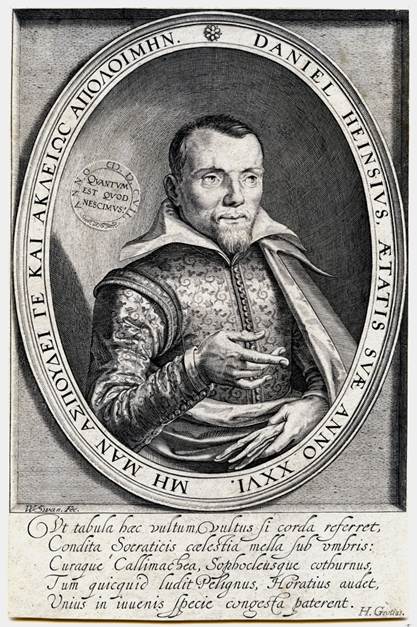
In 1613, Jan Jacobszoon Paets, Leiden University’s printer (1603-1619), published a mature fruit of Daniel Heinsius’ (1580–1655) ‘Hellenizing Muse’: the Peplus Graecorum epigrammatum. Aside from an appendix of ἐρωτικά, which fills the final pages of the last gathering (removed in subsequent editions), the work is a collection of fifty-six Greek epigrams outlining a history of ancient philosophy through sketches of its protagonists; a combination of pseudo-Aristotle’s Peplus, Diogenes Laertius’ Vitae philosophorum, and – in its use of rare words and antipathy towards sophistry – Timon of Phlius’ Silloi, woven into an allusive tapestry by an author as learned as he was creative.

Figure 1 – Portrait of Daniel Heinsius (c. 1607) with a Latin epigram by Hugo Grotius, dedicatee of the Peplus (in my English translation: “If the appearance reflected the heart as the portrait reflects the appearance, in the image of this unique young man would manifest the heavenly honey produced in the shadow of Socrates, both the thoughtfulness of Callimachus and the cothurnus of Sophocles, and finally, all the playfulness of the Paelignus [i.e., Ovid] and the audacity of Horace.”)

Heinsius was a leading figure of the late Renaissance: scholar and librarian, editor of ancient texts, literary theorist, and poeta trilinguis (Ancient Greek, Latin, and Dutch). His Greek poetry is renowned, but remained little explored in any depth, until Elisabeth Aydin’s preparations for critical edition of the Peplus with Les Belles Lettres began.

The care Heinsius took in producing such a refined work in Greek and the knowledge required to appreciate it spur questions about the Peplus’ genesis, aims, and intended audience. The first source of insights into these aspects of Heinsius’ poetic endeavour are its paratexts, which function as a δαίμων connecting the literary work to its intellectual and socio-cultural context. In this blogpost, I will focus on two paratextual elements, related respectively to the dedication and the epilogue of the collection.

Figure 2 – Portrait of Hugo Grotius (1636) accompanied by two elegiac couplets by Daniel Heinsius, dated one year after the first edition of the Peplus (1614) (in my English translation: “A prodigy placed on earth by the heavens, before whom the motherland Batavia justly shivers, unable to believe that she gave him birth – so excellent Hugo presented himself in his eyes, so excellent in his face. Consider his image human; everything else, divine.”)

The Peplus opens with a dedicatory letter in Latin addressed to the jurist, humanist, and diplomat Hugo Grotius (1583–1645). Discussing this letter as befits its interest for scholarship would require more than a few words, which I intend to do in a work I am developing as part of a forthcoming volume on early modern printed paratexts. Here, I wish only to draw attention to one remarkable aspect of Heinsius’ dedication to Grotius, namely that it is performed twice: firstly through the aforementioned Latin letter and secondly by a Greek liminal text, printed at the end of the collection. After the last poem devoted to an ancient philosopher, in fact, there is another Greek epigram, serving both as the final portrait in the gallery of wise men and as a carmen liminare, through which Heinsius consolidates the dedication at the beginning (p. 27): [The following transcriptions reflect the orthography and the use of diacritics found in the editio princeps, except for the accents in the title]

ΕΙΣ ΓPΩTION TΟN ΠΑΝΥ.

Γρωτιάδη περίπυστε, τετιμένε πᾶσι θεοῖσιν,

Ἄρχων ἱστορίης, ἕρμα δικαιοσύνης,

Πᾶσαν τὴν σοφίην μεμυημένε, δέχνυσο τούσδε

Ἀνέρας, ἀρχαίης ἡγεμόνας σοφίης.

Εἰσὶ δὲ τεσσαράκοντα καὶ ἐννέα· τῶν κλέος αἰεὶ

Ἔσσεται, ἐκ Μουσῶν πάντῃ ἀειδόμενον.

Εἰ δὲ περισσοὶ ἔασι, τὶ τὸ πλέον; εἷς γὰρ ἀριθμὸν

Λείπων Γρωτιάδης ἄρτιον ἐκτελέσει.

“To the excellent Grotius

Illustrious Grotius, revered by all the gods,

master of history, pillar of justice,

you who are initiated in all wisdom, accept these

men, leaders of the ancient wisdom.

There are forty-nine of them; their glory will last

forever, sung in every possible way by the Muses.

But if they are odd in number, what to add? One, Grotius,

leaving the number even, will bring it to its end.”

Thus, the Peplus begins and culminates with Grotius’ name. While the prose dedication letter in Latin stands clearly outside the core text, with this Greek epigram Heinsius blurs the line between text and paratext, having the dedicatee be both the addressee of the Peplus, paradigm of its ideal reader, and one of its characters – in a way, the most important. Heinsius uses the standard dedication at the beginning to provide the intellectual framework to understand his opus and associate it with the prestigious name of Grotius, but at the end he makes Grotius himself an integral part of the collection, using Greek poetry to consecrate him as not only an excellent scholar of philosophy, but a great philosopher himself, towards whom the gallery of wise men almost tends teleologically.

However, even though this poem literally puts the word ‘end’ (ἐκτελέσει) to the collection, the reader finds still another text before the erotic appendix. The epigram to Grotius is followed by a composition that serves as a coda and might provide a key to understanding Heinsius’ work. After a short prose introduction in Greek, which establishes the topic and expands the contents of the poem, the author writes (pp. 27–28):

Ἡ σοφίη θρεφθεῖσα παλαιγενέων ὑπʼ ἀοιδῶν,

Οἷα παρ’ ἄχραντος μητέρι παρθενική,

Εἰς τοὺς λεσχομάχας μεταβαινομένη φύγεν ἄνδρας,

Τοὺς Μουσῶν φθορέας, τοὺς ἐρίδων προπόλους,

Ὡς δ’ ἴδε τὸν πώγωνα μέγαν Zήνωνος ἄνακτος,

Αὐτὸν δὲ μαλακῶς πὰρ πυρὶ κεκλιμένον,

Θέρμους ἀμφαφόωντα σοφῶς μάλα, καὶ τὸν ἀλήτην

Ἥρω βακτροφόραν, τὸν κύνα Διογένη,

Τόνθʼ Ἡράκλειτον μάλα δάκρυσιν ἀμφὶ ῥέοντα,

Τόντʼ Ἐπικούρειον νοῦν ἀτομοπλοκίδαν,

Οὐδὲν ἀνευροῦσα μεγάλη θεός, ἢ κενὸν ἀσκὸν

Δοξοσόφου μανίης, καὶ λογοδαιδαλίης,

Ἐψεῖν μὲν Zήνωνα φακὴν ὡς πρῶτον ἒασσε [sic pro ἐάσσε],

Τὸν κύνα δὲ ῥιγοῦν ὡς πάρος, ἠδ’ ὑλάειν,

Κλαίειν δʼ Ἡράκλειτον, ὅσον φίλον ἔπλετο θυμῷ,

Τὸν δʼ ἀτόμους τέμνειν τὰς ἀπεραντολόγους·

Αὐτὴ δʼ ἐς Μουσέων γλυκερὸν πάλιν ἤλυθε κόλπον

φεύγουσα, προτέρην ὧν ἔχε τὴν κομιδήν.

“Wisdom, nurtured by the ancient bards, 

like an immaculate maiden by a mother, 

ran away, turning to quarreling idlers,

the corrupters of the Muses, the ministers of conflicts.

But as she saw the great beard of lord Zeno,

and himself laying languidly reclined by the fire,

filling his hand with lupin beans – wisely indeed! –, and the wandering 

stick-bearing hero, the dog Diogenes,

and Heraclitus overflowing with tears,

and the Epicurean mind weaving atoms, 

the great goddess, who found nothing but an empty sack

of pretentious madness and word-craft,

she let Zeno stew his lentil-soup as before, 

she then let the dog shiver as before and bark,

she let Heraclitus weep to his heart’s content, 

and she let him cut the atoms, endless in their discourse (?);

but she returned fleeing to the sweet embrace of the Muses,

from them she got the care she used to receive”.

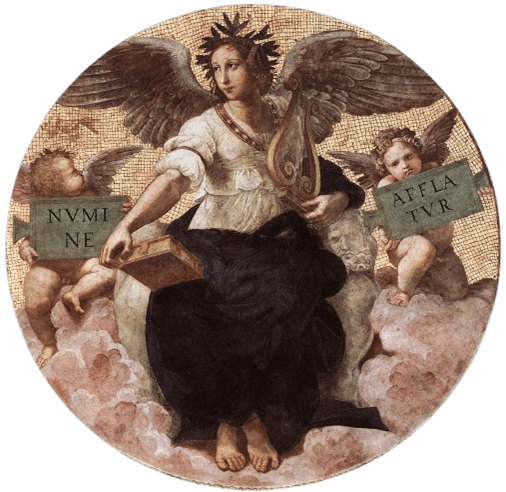
Figure 3 – Allegory of inspired (numine afflatur) poetry, by Raphael.

Leaving aside a broader discussion of Heinsius’ poetics and critical positions, I wish to highlight some suggestions raised by the epilogue of the Peplus, including both the epigram and its prose preamble. Here, Heinsius outlines the ‘misfortunes of wisdom’, which he situates in the shift from the prisca sapientia of poet-philosophers (e.g. Orpheus, Homer, Empedocles) to the mundane rhetoric of the ‘sophists’. As in Timon’s Σίλλοι, the thinkers labeled as sophists, devoted to empty quarrels, are leaders of philosophical schools promoting conflicting ideas, which includes the stoic Zeno, the cynic Diogenes, Heraclitus, and Epicurus. On the other hand, Heinsius’ sarcasm seems to spare Plato and Aristotle, who are not among those who scare wisdom away and  whose doctrines he may have regarded, in line with Renaissance Neo-Platonism, as intrinsically harmonious and compatible with the divine truth expressed by poets.

Figure 4 Allegory of philosophy, specifically physics and ethics (note the volumes she is holding, labeled naturalis and moralis respectively), by Raphael.

In an age heavily influenced by the debate surrounding Aristotle’s Poetics (which Heinsius himself had edited in 1611, two years before the first edition of the Peplus), where poetry and philosophy are considered separate fields, the Peplus seems to suggest that true wisdom is rooted in poetic inspiration, and as such it can be attained exclusively through a poetic practice of thought. In this case, Heinsius is not merely advocating a return to such philosophy, but moreover enacting it himself, since in the dedicatory letter he regards doxography and history of thought as branches of philosophia themselves. Therefore, the eventual return of Σοφίη to the embrace of the Muses that marks the end of the Peplus would be a metaphor for Heinsius’ own work, which presents itself as more than an erudite endeavour: it fulfills the reconciliation of poetry and philosophy, established in New Ancient Greek verse.


Figures

Sources
  • Heinsius, D. (1613), Peplus Graecorum epigrammatum, In quo omnes celebriores Graeciae philosophi, encomia eorum, vita, et opiniones recensentur, aut exponuntur, Jan Paets Jacobszoon, apud Lodewijk I Elzevier, Leiden (USTC 1015759).
References
  • Aydin, E. (2018), Le “Peplus Graecorum Epigrammatum” de Daniel Heinsius, une adaptation de Diogène Laërce à la Renaissance, in «Neulateinisches Jahrbuch» 20, pp. 29-55.
  • Becker-Cantarino, B. (1978), Daniel Heinsius, Boston.
  • Golla, K. (2008), Daniel Heinsius’ Epigramma auf Hesiod, in Daniel Heinsius: Klassischer Philologe und Poet, edd. Lefèvre, E. – Schäfer, E., Tübingen, pp. 31–55.
  • Kern, E. (1949), The Influence of Heinsius and Vossius upon French Dramatic Theory, Baltimore.
  • Lamers, H. – Van Rooy, R. (2022a), “Graecia Belgica”: Writing Ancient Greek in the Early Modern Low Countries, in «Classical Receptions Journal» 14, 4 (2022), pp. 435-462.
  • Lamers, H. – Van Rooy, R. (2022b), The Low Countries, in The Hellenizing Muse: A European Anthology of Poetry in Ancient Greek from the Renaissance to the Present, edd. Pontani, F. – Weise, S., Berlin, pp. 249-251; 253-254.
  • Meter, J. H. (1984), The Literary Theories of Daniel Heinsius: A Study of the Development and Background of His Views on Literary Theory and Criticism During the Period from 1602 to 1612, Assen.
  • Sellin, P. R. (1968), Daniel Heinsius and Stuart England, Oxford.
  • Wels, V. (2013), Contempt for Commentators: Transformation of the Commentary Tradition in Daniel Heinsius’ “Constitutio tragoediae”, in Neo-Latin Commentaries and the Management of Knowledge in the Late Middle Ages and the Early Modern Period (1400-1700), edd. Enenkel, K. A. E. – Nellen, H., Leuven, pp. 325-346.

How to cite

Graziano, Domenico. 2025. “On the Hem of Daniel Heinsius’ ‘Peplus Graecorum epigrammatum’: Poetry, Philosophy, and Paratexts in New Ancient Greek.” Hermes: Platform for Early Modern Hellenism (blog). 1 June 2025.

Deposit in Knowledge Commons: https://doi.org/10.17613/76npd-xfn77

Στεναγμοὶ τῶν ναυτῶν: Traveling from France to Greece in the 1830s

Lev Shadrin (Universität Innsbruck)
<...> καὶ τὸ πνεῦμα, καίπερ μαλακὸν ὂν, ὤθησεν ἡμᾶς πρὸς Ἄνδρον. 
Στεναγμοὶ τῶν ναυτῶν.
“<…> and the wind, as gentle as it was, pushed us towards the Andros island.
Sailors groan.”
GSA 108/2922, Goethe- und Schiller-Archiv Weimar, f.51v

In 1837, Karl Benedikt Hase, a Franco-German Hellenist working in Paris, made a two-month long trip to Greece. His primary destination was Athens, where Hase planned to meet with his colleagues and attend lectures at the newly established University of Athens.

The only information about this trip comes from Hase’s private diary, which he has kept throughout his life, diligently recording daily events, meetings, dinners, and private affairs in an eclectic fusion of Ancient Greek interspersed with Modern Greek vocabulary and French transliterations.

Let’s take a glimpse at the passages describing Hase’s adventures across the Mediterranean and the Aegean seas and see what it was like to travel to Greece in the early 19th century.

Charting the course

The diary pages span the hot summer months of June and July 1837 and read very much like a travelogue, in contrast to the regular daily entries. The changes are evident in the content and narrative structure, vocabulary and syntax, and can even be noticed in Hase’s writing.

Taken out of his daily routine of editing manuscript catalogues for the Bibliothèque Royale, teaching Greek at the École Polytechnique, and moving around the same dozen places in Paris, Hase leaped at the opportunity to scrupulously record every step of the journey. Each travel day in the diary is bespeckled with toponyms, which have been diligently transcribed, transliterated or translated into Greek, supplied with necessary diacritics, and properly declined.

These named entities present the diary reader (and transcriber) with a collection of linguistic puzzles, some of which are quite easy to solve, e.g. Προβιγκία1 for the French region of Provence or Ἔλβα νῆσος for the island of Elba. In other cases, Hase refers to the ancient names of the cities, for instance, Μασσαλία for Marseille, Λούγδουνον for Lyon, or Νεαπόλης for Naples. Solving these toponymic riddles to correctly identify each location required consulting secondary sources, including 19th-century maps.

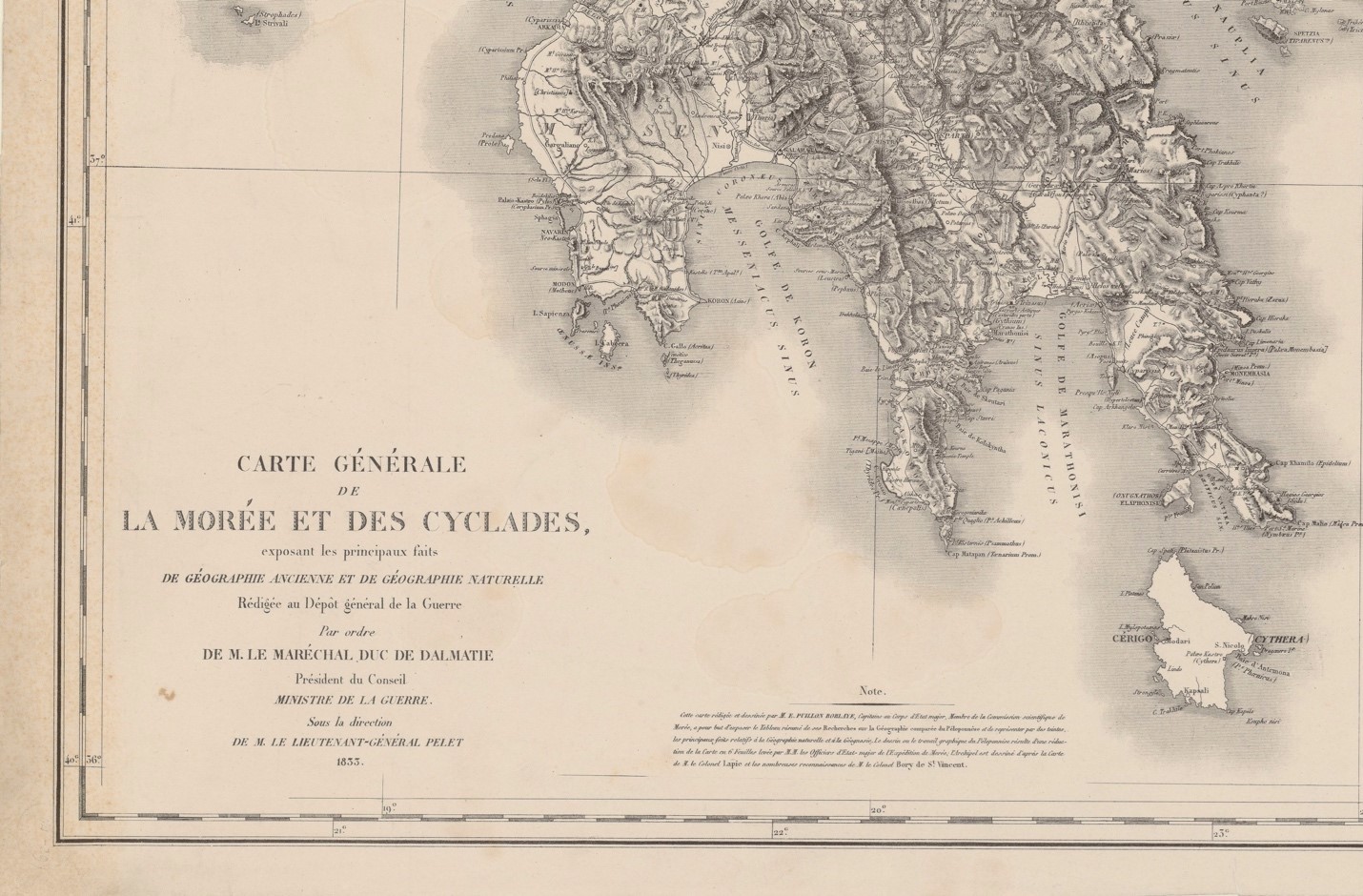
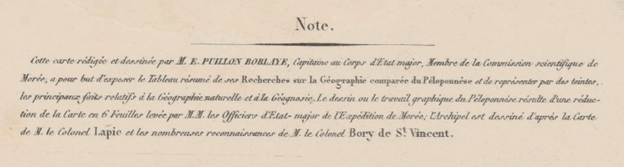
Hase is well known for his editorial contributions to, among other works, cartography charters – in previous diary entries he mentioned French cartographers Pierre Lapie and Émile Le Puillon de Boblaye, who had commissioned Hase to verify and append the Greek toponyms for their maps. On May 31, a couple of days before departing for Greece, Hase noted down a list of items packed away in his travel bag, which includes inter alia a map of the Cyclades by Boblaye.

“I have in my bag: 
1. maps of the Rhône river
2. (maps) of the Peloponnese
3. a map of the Cyclades, by Boblaye”

An excerpt from the diary volume of 1837 (GSA 108/2922, f.46r)

One of Boblaye’s maps, La carte générale de la Morée et des Cyclades of 1833, is preserved at the Bibliothèque National de France. It features in detail the Peloponnese region along with the numerous Aegean islands and names of towns, villages, and islands. It is very likely that Hase had indeed packed a copy of this πίναξ τοῦ βωβλαῖε for the trip. Certain toponyms mentioned in the diary presented quite a challenge for identification at first. However, they align perfectly with the names of islands and cities featured on the map, which often contain both contemporary and ancient names:

K.B. Hase, diary of 1837É. Boblaye, map of 1833Modern Greek name
ἡ νῆσος τοῦ Ἁγίου Γεωργίου τοῦ Δένδρου / Ἅγιος Γεώργιος δ’ ἈρβώρανSt. Georges d’ArboraΆγιος Γεώργιος Ύδρας
ΓαϊδουρονῆσιGaïdero-Nisi (Patrocli Vallum)Πάτροκλος (Γαϊδουρονήσι)
τὸ ἀκρωτήριον ΜαλείανCap Malio (Malea Prom.)Ακρωτήριον Μαλέας
ΖέαZea (Ceos)Κέα (Τζία, Κέως)
ΘερμιάThermia (Cythnus)Κύθνος 

After carefully transcribing the toponyms and identifying the names, I was able to put together a map of Hase’s travels. Since the road network of France has evolved quite significantly over the past 200 years, the lines connecting the nodes are quite arbitrary and serve as a general guide rather than an accurate route. The sea is even worse – there are no roads altogether, therefore I had to rely solely on the sequence of toponyms in the text, as well as occasional directions (e.g. “to the left we saw…”).

Coaches, boats, and ἀτμόπλοια

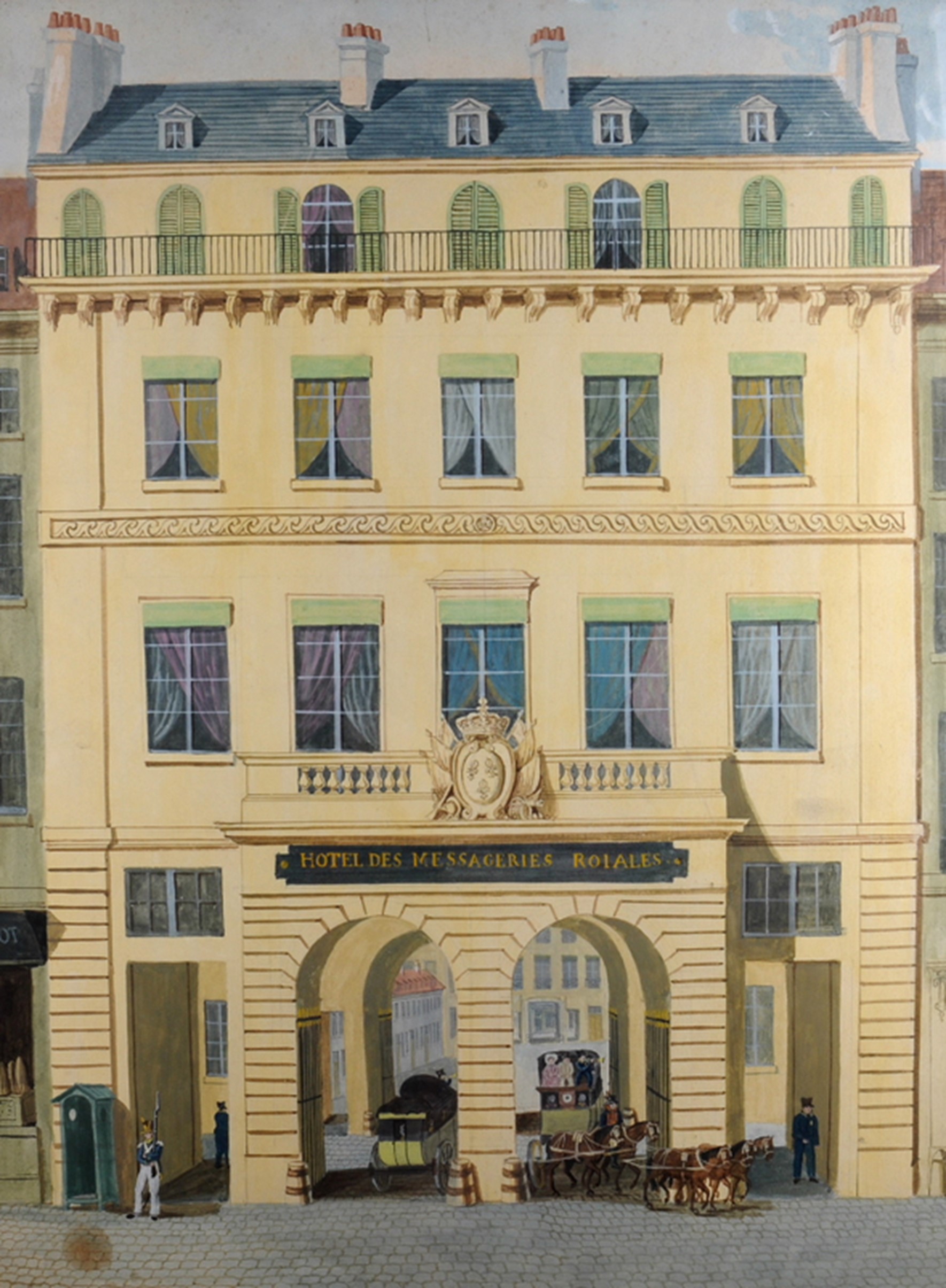
In today’s day and age, it is easy to overlook the troubles and perils of long-distance travels in the 19th century. Hase had to use several means of transportation, endure the tumultuous and unpredictable seas, and was even faced with a plague outbreak throughout his journey. He left Paris on June 4 in a stagecoach of Messageries Royales, a diligence company that provided postal and transportation services. After an emotional farewell with his maid Louise (χωρισμὸς ἐν κλαυθμῷ καὶ ξὺν ἡδίστῃ εὐδία, “departure in tears and in most pleasant weather”), Hase set off from the Hôtel des Messageries at rue Notre-Dame-des-Victoires (Παναγίᾳ τῶν Νικῶν).

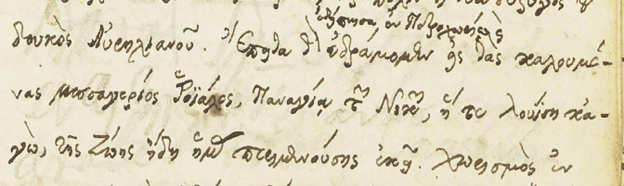
<…> ἐδράμομεν εἰς τὰς καλουμένας Μεσσαγερίες Ῥοϊάλες, Παναγίᾳ τῶν Νικῶν <…>
<…> we rushed to the so-called Messageries Royales, at rue Notre-Dame-des-Victoires <…>

GSA 108/2922, f.47r

The stagecoach often traveled during the night (νυκτοπορία), but Hase was able to enjoy certain comforts, like breakfasts in hotels, spontaneous purchases (ἠγόρασα σειρῆτι ἔρυθρον καὶ φουλάρδιον, “I bought a red ribbon and a scarf”), and even an occasional coffee along the way (ἔπιον ἐκεῖ καφέ). In Lyon, Hase boarded a boat, which took him further south to Avignon, where he continued onwards to Marseille in a coupé carriage, μεταξὺ ἐμπόρου τινὸς ῥετιρὲ <…> καὶ νέου ἐμπόρου κωμμὶς βοιαγεῦρ, “between some retired merchant <…> and a young commis-voyageur.

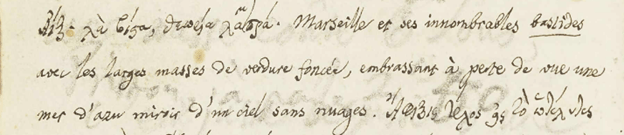
“Marseille et ses innombrables bastides avec les larges masses de verdure foncée, embrassant à perte de vue une mer d'azur miroir d'un ciel sans nuages.”
"Marseille and its countless bastides, with their broad masses of dark greenery, embracing as far as the eye can see an azure sea, mirror of a cloudless sky.”

GSA 108/2922, f.48v

Transliteration and code-switching are very frequent devices in Hase’s diary. Not only did he transcribe toponyms and neologisms into Greek, but on rare occasions he switched to French (like in the description of Marseille, shown in the picture above), German, or Latin to better convey his ideas.

In Marseille, Hase boarded a steamboat (the Modern Greek τὸ ἀτμόπλοιον almost looks out of place among all the classical Greek!), which carried him further into the Mediterranean – and to an inevitable stop on the island of Malta, which was at the time, unbeknownst to the travelers, ravaged by plague. This part of the journey, however, deserves a separate post!


The nine surviving volumes of Hase’s ‘Secret Diary’ form the core of the LAGOOS project, hosted at the University of Innsbruck and funded by the Austrian Science Fund (FWF) [Y 1519-G], Grant DOI 10.55776/Y1519. The project, which I am very happy to be a part of, seeks to make the diary available to scholarship for the first time in a digital edition.

Follow our website for updates on the life of the 19th century scholar as we flip the diary pages! We also have a separate website for the digital edition, where the first volume (1825) has recently been published.


Footnotes
  1. All quotations from the diary are provided in a semi-diplomatic transcription, which maintains Hase’s orthography. ↩︎

Pictures

How to cite

Shadrin, Lev. 2025. “Στεναγμοὶ τῶν ναυτῶν: Traveling from France to Greece in the 1830s.” Hermes: Platform for Early Modern Hellenism (blog). 1 April 2025.

Deposit in Knowledge Commons: https://doi.org/10.17613/9e6ap-x6r42

Erasmus and Budé: Frenemies forever!

Liese Dictus (KU Leuven)

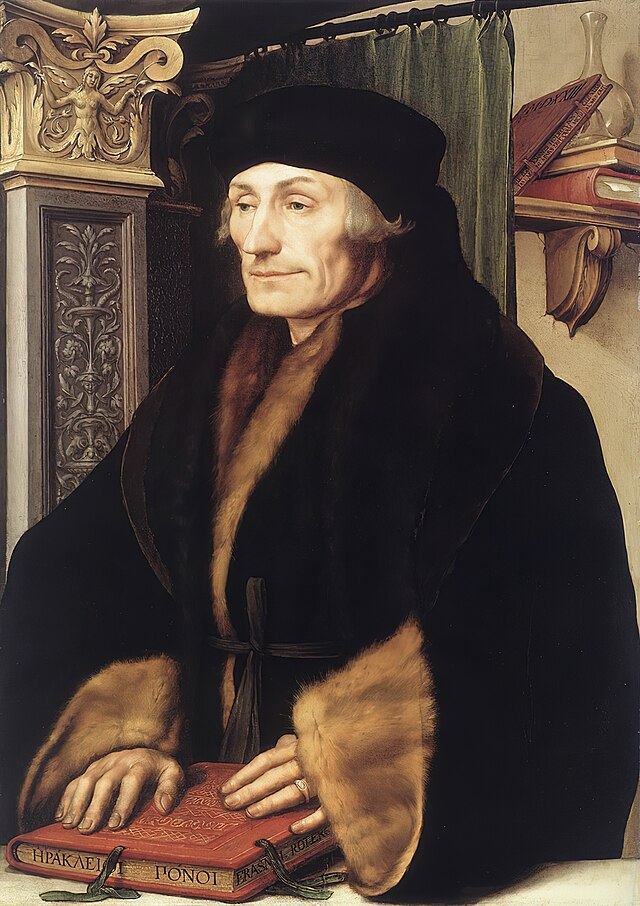
Erasmus’ sharp pen was a force to be reckoned with by his contemporaries. In his famous Praise of Folly the humanist author spared no one in society, including himself. Similarly, Erasmus proved in his letters that he could deal harsh blows with his pen strokes. A letter to the French humanist Guillaume Budé begins as follows:

Nae tu homo πάνυ βασιλικῶς munificus es, eruditissime Budaee, qui pro tam indocta epistola tam eruditam, hoc est iuxta Glaucum Homericum pro vix aerea reddideris plusquam auream, tum pro mediocri tam uberem tamque prolixam; imo non epistolam, sed volumen atque, ut melius dicam, thesaurum. (Epistula 531)

Really, my most learned Budé, what princely generosity! You have repaid my ill-educated letter with one of such exquisite learning, giving me like Glaucus in Homer more than gold for what was hardly bronze and have rewarded my mediocre performance with something so flowery and so long, it was not a letter, it was a volume, or rather a thesaurus. (translation by Mynors and Thomson)

Although Erasmus‘ opening sentence appears to be erudite and full of praise at first glance, his grotesque wording and ambiguous compliments are striking on closer inspection. The comparison of himself and Budé with the Homeric heroes Glaucus and Diomedes, as well as his climactic and exaggerated description of Budé’s previous letter as a thesaurus suggest that the friendship between the two humanists turned out to be more complex and more equivocal than one would expect.

Epistula 531 constitutes a key element in the correspondence between Erasmus and Budé. It marks the first rupture in a turbulent friendship that turned genuine affection into frustration and rivalry. Erasmus and Budé first met in Paris at the end of the 15th century. The preserved correspondence between the two humanists began around April 1516 with a letter from Erasmus to his French colleague. Budé’s experience in legal matters and his interest in philology and theology, which he shared with Erasmus, provided the two humanists with plenty of material for conversation. Soon they began to comment on each other’s work. Throughout their correspondence, the well-meant criticism became sharper and more bitter. Both Budé and Erasmus took offense at certain remarks, and misunderstandings between the two scholars continued to grow. After Epistula 531, Budé ended his communication with Erasmus. Eventually, the correspondence was resumed and carried on for a decade, although the later letters mainly dealt with mutual friends and shared opponents. The contact between Erasmus and Budé was full of friendly banter until real blows were struck and their friendship died a long and painful death.

The first signs of disagreement in the correspondence of the two humanists concern the proper use of writing style, both in Latin and Greek. Whereas Bude’s writings can be described as grand and weighty, Erasmus’ style can be characterised as lucid and accessible. The latter’s rather simple style prompted Budé’s comment in the previous Epistula 493 that Erasmus’ writings weren’t erudite enough and focused mainly on ‘futilities’, i.e. rather simple and popular genres. Although Budé formulated it in a kind manner by – likely ironically – praising Erasmus’ works, this remark seems bold and derogatory. Erasmus was dismayed and counterattacked his French colleague. The result is Epistula 531, in which Erasmus vacillates between exaggerated praise and harsh criticism. Beneath a sugar-coated layer of words hides a sharp invective.

The literary clash between Erasmus and Budé was fought with learned weapons, as befits a humanist letter. The use of Greek, for instance, proved to be formidable ammunition. Both humanists were well versed in this classical language and therefore did not hesitate to employ it in their correspondence. In a way, the use of Greek reflected the duality that the correspondence of Erasmus and Budé implied. The usage of Greek alongside Latin was not only employed in a hostile way, it also strengthened the bond between the correspondents in question. Greek was a language used only by a select audience. The bilingual communication between Erasmus and Budé was thus an acknowledgement of each other’s scholarship. From a single quotation to a full letter in Greek, their fondness for Ancient Greek manifested itself in various ways in their correspondence.

Erasmus employs code-switching in his letters to show his scholarship or to reflect his emotional commitment. Codeswitches provide variety and allow him to emphasise or camouflage certain elements. A concrete example in Epistula 531 is the appearance of the Greek word ἐνθυμήματα in the following sentence: “tantum in ista tua apologia praestas artificem, cui non satis fuit omnia mea ἐνθυμήματα refellere, nisi mea tela protinus in me ipsum retorsisses, subito que ex iudice faceres reum.” Erasmus’ criticism is apparent in this statement, claiming that Budé wasn’t satisfied with defending his own stances and deemed it necessary to attack Erasmus. The latter tried to reduce his part in the conflict by presenting his remarks as less compelling, describing them as mere ἐνθυμήματα, which can be translated as ‘suggestions’. Additionally Erasmus uses several Greek proverbs from his Adagia but a number of quotes from ancient authors also appear in his letters. Besides the appearance of a Greek word in the absence of a Latin synonym, Erasmus’ fondness for compound adjectives and words with concrete, almost tangible meanings is also evident in Epistula 531. The context in which the use of Greek is situated is crucial as well. When a particular domain is associated with the Greek language, such as philosophy or rhetoric, this often results in the appearance of Greek terminology. The Greek language is furthermore a valuable medium for messages that are not meant to be read by everyone. Full sentences in Greek hide Erasmus’ negative sentiments in Epistula 531 toward some members of the clergy, who he condescendingly calls ματαιολόγοι instead of the more positive θεολόγοι.

The conflict between the two humanists forced them to get the best out of their pens. A literary battle unfolded, fought out with words, quotations and code-switches. The use of Greek proved to be an extra weapon in the arsenal, which could be used both to win people over and to inflict an extra blow on an opponent. It was a versatile tool that could be used in different ways. Code-switches are so context-specific that, in Epistula 531, they form the fine line, as it were, between friendship and enmity. As with any conflict, there were casualties. In this battle, the friendship between Erasmus and Budé perished, but the battle fought deserves a place in the literary history books.

Pictures
Bibliography
  • The full letter can be found in Allen, P.S. et al. (ed.). Opus epistolarum Des. Erasmi Roterodami Vol. 2. Oxford: Clarendon, 1906.
  • The translation of Epistula 531 can be found in Mynors, R.A.B. and D.F.S. Thomson (transl.). The Correspondence of Erasmus IV. Toronto and Buffalo: University of Toronto Press, 1977.
  • On the use of Latin-Greek code-switching in Erasmus’ letters: Rummel, Erika. “The Use of Greek in Erasmus’ Letters.” Humanistica Lovaniensia 30 (1981): 55–92.
  • On Erasmus’ and Budé’s dispute: Carrington, Laurel. “The Writer and His Style: Erasmus’ Clash with Guillaume Budé.” Erasmus of Rotterdam Society yearbook 10, no. 1 (1990): 61–84.
  • On Erasmus’ and Budé’s correspondence: De La Garanderie, Marie-Madeleine (vert.). La correspondance d’Erasme et de Guillaume Budé. Paris: Vrin, 1967.
How to cite

Dictus, Liese. 2025. “Erasmus and Budé: Frenemies forever!” Hermes: Platform for Early Modern Hellenism (blog). 1 Februari 2025.

Deposit in Knowledge Commons: https://doi.org/10.17613/jmq9n-1×174

A Hellenic Voice from the Tyrolean Lowlands

Tobias Heiss (Universität Innsbruck)

A few years before the Austrian secondary education system underwent a structural reform in 1849, which established Ancient Greek as a mandatory subject, a Franciscan monk named Bern(h)ard Niedermühlbichler (1798–1850) already published two works of exemplary New Ancient Greek versification with a pedagogical goal in mind. As a teacher of classics in Hall in Tyrol he had first-hand experience with the obstacles that prevented his students – many of them to become clergymen later themselves – to achieve a better command of Latin and Greek during and after their schooling. Niedermühlbichler himself only taught fundamental grammar at the start of his career, before he became responsible for the so-called upper Humanitätsklassen, where poetry was read more extensively. Later, he was assigned the position of prefect within the school, before he became occupied with theological studies and instruction, namely canon law and church history, at the adjoined Franciscan monastery in Hall in Tyrol.

In 1844, Niedermühlbichler published a slim collection of playful Neo-Latin and Greek epigrams titled Epigrammata novi ex parte generis (Epigrams, partly of a new kind). The 225 Latin epigrams consist mostly of one- or two-liners and predominantly utilize the ambiguity of the language by means of wordplay – with an obvious example being anus in ep. 57 and 95. The twelve subsequent Greek epigrams, however, follow more traditional models. [Picture 2] Since not all readers were assumed to be fluent in poetical Greek and epigrams tend to be most effective if understood straightaway, the Greek pieces are accompanied by Latin prose translations and occasional explanatory endnotes. The poems’ themes and word choices are influenced by the epigrammatic tradition, as ep. 230 clearly shows, echoing an epigram by Palladas (Anth. Pal. 11.323):

Οὐδὲν ὁμοιότερον κολάκων κοράκων τε πέφυκεν

γράμμασι καὶ αὐτοῖς πράγμασι. Τοῦτο δὲ πῶς;

Ἀμφότεροι στερέουσ᾿ ὀφθαλμῶν ἄνδρας ὁμοίως,

οἱ μὲν τοὺς ζῶντας, οἱ δέ νυ τοὺς νέκυας.

“There is nothing that has more similarity than flatterers and ravens,
both in their letters and essence. Why is that?
Both deprive men of their eyes in a similar way,
one the living, one the dead.”

The first words οὐδὲν ὁμοιότερον allude to other epigrams from the same book of the Anthologia (cf. 11.149.2, 11.151.2) and the closing antithesis ζῶντας–νέκυας is used in good epigrammatic fashion elsewhere in Niedermühlbichler’s collection (e.g. ep. 227).

Aside from efforts of refined imitatio, one also stumbles across instances of clever puns on the peculiarity of vernacular language. As Niedermühlbichler explains in his endnotes, the following epigram 234 was written on the occasion of a speech held by a friend, who happened to be a terrible speaker:

Ὡς σὲ νεωστί, παρὼν ἅμ᾿ ἔταις πλεόνεσσι, λέγοντα

ἤκουον, Ζῆν᾿ ἦν εὖ μάλα λισσόμενος,

οὖς ἐμὲ θεῖναι ὅλως ὅλον, – ὄφρα μένοιμ᾿ ἂν ἀκουστής

ῥᾷον, μηκέτ᾿ ἔχων, οἷς ῥὰ φύγοιμι ποσίν.

“As I heard you giving a speech not too long ago with countless friends present,
I prayed deeply to Zeus,
to make me all ears, so I could remain a listener
more easily, if I had no legs, with whom I could simply take flight.

This depiction becomes even funnier, if we bear in mind the German idiom of being very attentive and eager to listen: ganz Ohr sein (to be all ears). Though lacking an equivalent in Greek, the joke is evident for the multilingual intended reader and adds an interesting comment on the German idiom, as if being literally all ears does not leave any choice but to listen. Witty allusions like these make the epigrams worthwhile and add some spice to their otherwise moralizing content. In his Praefatio, Niedermühlbichler explicitly defends his epigrams for lacking such gustus (p. 6) and notes the difficulty of even making sense at all in these types of epigrams that are solely based on homographs and polysemy. As the Greek epigrams strongly deviate in character from the Latin epigrams, it can be argued that they are written for a more erudite audience and are set out to please readers’ expectations of the epigrammatic genre.

Niedermühlbichler’s command of Greek and his Hellenizing program become more evident in his tome Εὐχολόγιον (1847), a book of pious prayers in a variety of metres, written exclusively in Greek. The book opens with dedicatory hymns to Pope Gregory XVI, who passed away shortly before the publication in 1846, and king Ludwig I of Bavaria (1786–1868), whose son Otto, the first king of Greece (1815–1867), received a copy with a dedication by Niedermühlbichler on the fly leaf (Bavarian State Library Asc. 3432 f).

Niedermühlbichler expresses his views on the relation of Ancient Greek and German as part of a lengthy prologue (Πρόλογος ἀπολογητικός), defending the benefits of lifelong Greek learning even after school with the help of his book (p. XXXV):

[…] σώζοιτ᾿ ἂν […] ἐπιστήμη ἡ τῆς γλώττης, καὶ ταῦτα πολὺ τῶν ἄλλων περιούσης, τῶν ἐν τῇ Εὐρώπῃ πρεσβυτάτης, τῆς τῶν Ῥωμαίων ἐξ ἡμισείας γοῦν μητρός, αὐτῆς δὲ μάλιστα πασῶν ἐκμεμουσωμένης, λογικωτάτης τε καὶ σημαντικωτάτης ὑπαρχούσης, βραχείαις ταῖς συλλαβαῖς ὀλίγοις τε τοῖς ἔπεσι πολλὰ φραζούσης, καὶ ὅλως καλλίστης εἶναι ὡμολογημένης, ᾗτινι οὔτις ἂν τῶν νῦν ἐν ζῶσι γλωσσῶν κρατούσων περὶ τῆς ἀρετῆς καὶ πρωτείας ἐρίζοι, εἰ μὴ ἴσως ἡ τῶν Γερμανῶν διά τε ἰδίαν τινὰ δεινότητα ταύτης καὶ πολλὴν τὴν ὁμοιότητα πρὸς ἐκείνην καὶ ξυγγένειαν δέ τινὰ ἀναμφήριστον, ᾗ τὰ μὲν θυγάτηρ, τὰ δὲ καὶ ἀδελφὴ τῆς τῶν Ἑλλήνων γεγονυῖα γνωρίζεται.

“[In that way] the knowledge of the language could be preserved, which certainly surpasses all other languages, which is the oldest in all of Europe, which is seen at least half as the mother of Romans, which is the most melodious of all, and the most logical and expressive language, which can elaborate many things with short syllables and few words and which is altogether agreed upon to be the most beautiful, with which none of the languages among the living could compete in matter of excellence and rank, except perhaps the German language due to its particular exactness, the striking similarity with Greek and a certain undeniable kinship with it, which is why German is known sometimes as a daughter, sometimes as a sister, descended from the language of Greeks.”

This idea of a Greek-German kinship certainly appealed to the German royals and their aspirations in Greece at the time, who believed to be the true heirs of a noble civilization.

The twofold purpose of the Εὐχολόγιον is the benefit of prayer and the benefit of language learning (p. XXXIII). [Picture 6] After all, Niedermühlbichler was first and foremost a clergyman, only later to be followed by his occupation as a teacher of Greek. Because he was concerned with the place of Greek in modern times, he took it into his own hands to provide his students and other learners with daily prayers written in a language otherwise rarely used. Naturally, they should be studied repeatedly and at all sorts of different occasions, as titles like ῞Υμνος, εἴ ποτε ἐξυπνίζοιο, βραχύς (A short hymn, if you should wake up one night; p. 317) strongly suggest.

With his Εὐχολόγιον, Niedermühlbichler made an argument for Greek in terms of religious expression as well as a language of special interest for German speakers. This double aim meant that his second publication could speak to language learners, to religious leaders, and to political leaders at the same time. On the other hand, the Greek epigrams remain a hidden gem in his Epigrammata, a collection otherwise focused on the needs of Latin language learners. They may only pay off for the patient and persistent reader, a reader of the kind Niedermühlbichler distinctly wishes for at the end of his Praefatio (p. 8):

[…] Te, prudens ac benevole Lector! rogo, ut iam ad ipsa haec – a me sic dicta – epigrammata convertaris, eaque patienter legendo percurras, patienter et ipsum me feras auctorem; quem Tu si minus feres, ego Te feram, etiam plus aequo Catonem.

“I ask you, clever and kind reader, to direct your attention to just these epigrams, as I call them, already and to skim through them patiently, and, in addition to that, to put up with me, the author, in the same way. If you do not really put up with me, I shall put up with you in an even calmer manner than I do with Cato.”

Picture Captions
  • Picture 1: Official permission to teach canon law from the diocese of Brixen in 1837.
    Source: All pictures were taken by the author if not stated otherwise .
  • Picture 2: Front cover of Epigrammata novi ex parte generis (1844).
  • Picture 3: Greek and Latin text of ep. 230.
  • Picture 4: Front cover of the Εὐχολόγιον (1847) with the alternate Latin Title.
  • Picture 5: Title page of the Εὐχολόγιον (1847).
  • Picture 6: Dedication of the Εὐχολόγιον to Otto of Greece (1815–1867) on fly leaf. Source: https://www.digitale-sammlungen.de/de/view/bsb10265582 ?page=5 (last accessed: November 2024).
  • Picture 7: Part of the Εὐχολόγιον has been preserved as a manuscript at the Franciscan monastery in Hall in Tyrol (Sig. MS I 401), corresponding to pages 175–326 in print.
  • Picture 8: ῞Υμνος, εἴ ποτε ἐξυπνίζοιο, βραχύς in Niedermühlbichler’s handwriting.
Bibliography
  • Barton, William M., Martin M. Bauer and Martin Korenjak. 2022. “Austria.”In The Hellenizing Muse: A European Anthology of Poetry in Ancient Greek from the Renaissance to the Present, edited by Filippomaria Pontani and Stefan Weise, 688–721. Trends in Classics–Pathways of Reception. Berlin & Boston: de Gruyter.
  • Schaffenrath, Florian. 2012. “Von der Vertreibung der Jesuiten bis zur Revolution 1848: Dichtung.” In Tyrolis Latina: Geschichte der lateinischen Literatur in Tirol, Band II, edited by Martin Korenjak, Florian Schaffenrath, Lav Šubarić and Karlheinz Töchterle, 918–940. Wien, Köln & Weimar: Böhlau Verlag.
How to cite

Heiss, Tobias. 2024. “A Hellenic Voice from the Tyrolean Lowlands.” Hermes: Platform for Early Modern Hellenism (blog). 2 December 2024.

Deposit in Knowledge Commons: https://doi.org/10.17613/z6f78-cgc26.

At the Dawn of Early Modern Hellenism: Manuel Chrysoloras and the Revival of Greek Studies in Renaissance Europe

Chiara Gazzini (University of Oslo)

The Steigenberger Inselhotel on Lake Constance, formerly a Dominican monastery, holds a copy of an epitaph ascribed to the Italian humanist Pier Paolo Vergerio (1370–1444/45). Originally placed near the altar of the monastery, the inscription was on the gravestone of a Greek who died in Constance on 15 April 1415 during the Council, and praises him as a highly educated, wise, and honest man. The man, celebrated in a similar inscription by Poggio Bracciolini (1380–1459) for his services to the homeland and for restoring the Greek language in Italy, is the Byzantine Manuel Chrysoloras. 

Born in Constantinople in 1360 to a noble Byzantine family, Chrysoloras was a distinguished scholar, professor, and high-ranking diplomat in the service of Emperor Manuel II Palaeologus (1391–1425) during the years of the Ottoman threat. As an imperial ambassador, Chrysoloras made his first trip to Italy sometime between 1390 and 1395, travelling to Venice with his compatriot Demetrius Kydones (c. 1324–98). On this occasion, Chrysoloras made his first contacts with the emerging world of Humanism, giving private Greek lessons to the Florentine patrician Roberto de’ Rossi (d. 1417) and attracting the attention of Coluccio Salutati (1332–1406). As chancellor of Florence, Salutati offered Chrysoloras the newly created chair of Greek at the city’s university, where the Byzantine taught from 1397 to 1400: among his students were Pier Paolo Vergerio, Leonardo Bruni (1370–1444), Jacopo d’Angelo (c. 1360–1411), and other future leaders of Italian Humanism and translators of ancient Greek literature. Chrysoloras left Florence in 1400 to join Manuel II in Lombardy, where he spent three years until 1403, dividing his time between diplomacy, teaching, and literary pursuits. One of his students at the time was Uberto Decembrio (d. 1427), a member of the Visconti intellectual circle in Pavia; with him, Chrysoloras prepared the first Latin translation of Plato’s Republic, a crucial step in the recovery and transmission of the classical heritage to the West.

In the following years, Chrysoloras was involved in diplomatic missions on behalf of Manuel II and visited some of the Western royal courts to seek aid for his besieged homeland. For the same purpose, Chrysoloras travelled to Bologna in 1410 to meet Alexander V (Peter Philarges, c. 1339–1410) but missed the opportunity due to the antipope’s sudden death. Agreeing to join the entourage of John XXIII (Baldassarre Cossa, c. 1370–1419), Chrysoloras accompanied the new antipope on his transfer to Rome in 1411 and sojourned in the city until 1413. It was a fruitful period for Chrysoloras’ cultural endeavours, as he had no official position or duties to fulfil within the papal Curia. His pupil during those years was John XXIII’s secretary, Cencio de’ Rustici (d. 1445), who later played an important role in Roman Humanism as a discoverer of manuscripts and translator of Greek texts.

The last chapter of Chrysoloras’ life coincides with the early stages of the Council of Constance, convened by John XXIII to end the Western Schism. Chrysoloras played a part in its preparation, being one of the envoys sent by the antipope to the King Sigismund of Luxembourg (1368–1437), in 1414, but it is not clear if, or how much, he contributed to its work. Although weak and ill, in Constance Chrysoloras managed to teach Greek to Bartolomeo Aragazzi (d. 1429), another prominent Italian humanist and translator, before dying on 15 April 1415. 

Among modern scholars, Chrysoloras is best remembered for his role as distinguished professor of Greek in Italy and for his pioneering contribution to the revival of Greek studies in the Renaissance. Indeed, Chrysoloras’ teaching in Florence marked a turning point in early modern cultural history, laying the foundations for a stable tradition of Greek studies in Italy and Europe. In addition, Chrysoloras’ Greek grammar, the Erotemata, served as a standard textbook for many generations to come. Later biographers hailed Chrysoloras’ coming to Florence as an epochal event, but his contemporaries did not hide their excitement either: Coluccio Salutati greeted the news of Chrysoloras’ imminent arrival as that of a new god, while Leonardo Bruni did not regret abandoning his law studies to attend Chrysoloras’ classes and learn the language that would finally enable him to “speak” with Homer, Plato, and Demosthenes. This is perfectly in keeping with the cultural climate of late fourteenth-century Florence and the trends specific to Salutati’s circle. At the same time, it reflects, at least in part, Chrysoloras’ own vision of his activity in the West. This is clear from the fortnight of Greek and Latin letters that make up the bulk of Chrysoloras’ oeuvre: especially when writing to his students, the Byzantine praises the ancients as the supreme source of intellectual nourishment and notes the importance of getting a reliable picture of their works by reading them in the original language. However, Chrysoloras attached far greater importance to his cultural endeavours, which had the same motives and aims as his diplomatic service to the imperial authority. Realising, like most contemporary Byzantines, that what was left of the Empire was doomed by the advance of the Turks, Chrysoloras’ argued in his letters that a survival of Byzantium was still possible by preserving its literary heritage. For Chrysoloras, this was both a political and civic responsibility. Writing to Manuel II, he urged him to do everything in his power to prevent the loss of the rich culture that Byzantium had inherited from the ancients, aware that this would lead to the country’s ultimate downfall. For his part, Chrysoloras contributed to the goal in many ways during his lifetime: as a diplomat, promoting reconciliation between East and West; as a teacher, passing on the legacy of Greek language and literature to the Latin-speaking world; and, finally, as an epistolographer, with letters that reveal his personality, his acquaintances, his scholarly tastes, but also his efforts to build a bridge between East and West, to re-establish in the present the intimate “communion” between the two great civilisations of the ancient world, and the strength of their common culture.

Pictures
Bibliography
  • Cammelli, G. I dotti bizantini e le origini dell’Umanesimo, I: Manuele Crisolora, Firenze, Vallecchi, 1941.
  • Gamillscheg, E. “Ch(rysoloras), Manuel”, Lexikon des Mittelalters, II, Stuttgart–Weimar, Metzler, 1999, 2052–53.
  • Gazzini, Ch. ‘L’edizione delle epistole di Manuele Crisolora. Status quaestionis e prospettive di ricerca’, Annali dell’Istituto universitario Orientale di Napoli. Sezione filologico-letteraria 38, 2016, 119–78.
  • Maisano, R. – Rollo, A. Manuele Crisolora e il ritorno del greco in occidente. Atti del Convegno Internazionale (Napoli, 26-29 giugno 1997), Napoli, Istituto Universitario Orientale, 2002.
  • Mergiali-Sahas, S. “Manuel Chrysoloras (ca. 1350-1415), an Ideal Model of a Scholar-Ambassador, Byzantine Studies / Études Byzantines, n.s. 3, 1998, 1–12.
  • Rollo, A. Gli Erotemata tra Crisolora e Guarino, Messina, Centro Interdipartimentale di Studi Umanistici, 2012.
  • Thorn-Wickert, L. Manuel Chrysoloras (ca. 1350-1415). Eine Biographie des byzantinischen Intellektuellen vor dem Hintergrund der hellenistischen Studien in der italienischen Renaissance, Bonner romanistische Arbeiten 92, Frankfurt a.M.-Berlin etc., Peter Lang, 2006.
  • Trapp, E. et al. “Χρυσολωρᾶς Μανουήλ (Chrysoloras Manuel)”, Prosopographisches Lexicon der Palaiologenzeit, XII, Wien, Verlag der Österreichischen Akademie der Wissenschaften, 1994, nr. 31165.

How to cite

Gazzini, Chiara. 2024. “At the Dawn of Early Modern Hellenism: Manuel Chrysoloras and the Revival of Greek Studies in Renaissance Europe.” Hermes: Platform for Early Modern Hellenism (blog). 1 October 2024.

Deposit in Knowledge Commons: https://doi.org/10.17613/z55a-6y21.